
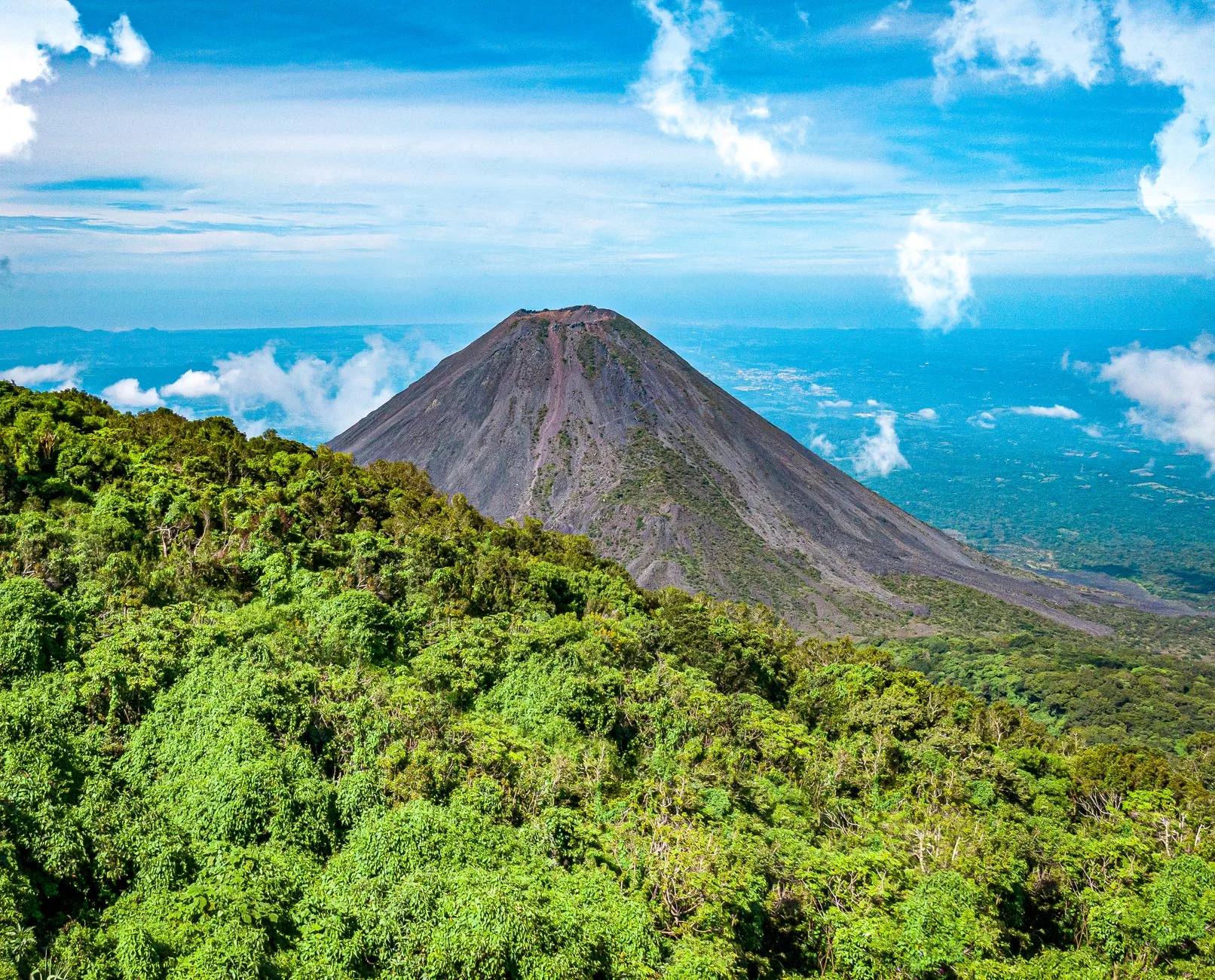
A morning on Santa Ana volcano, an afternoon beside Lake Coatepeque and a few days on the Pacific coast make a rewarding first trip to El Salvador. This 10-day route also includes Maya archaeology, coffee-country towns and a forest walk. It starts and ends in San Salvador, with overnight bases in Santa Ana, the Ruta de las Flores and the coast.
What to know before you go
- For the volcano: Bring water, sun protection and a rain layer for Santa Ana. Confirm the park’s current departure and registration arrangements before making the trip.
- For getting around: A car or private driver makes it easier to reach trailheads and smaller towns. Buses connect many towns, but allow extra time when changing connections.
- For the coast: Ask a surf instructor about the day’s currents and choose a break that suits your experience.
Days 1–2: San Salvador and Maya heritage
Day 1: Arrive in San Salvador
Day 1: Arrive in San Salvador and take an easy afternoon. Walk around the historic centre, visit a museum if time allows, and try pupusas, thick corn tortillas filled with ingredients such as cheese or beans. They are usually served with curtido, a tangy cabbage relish. Stay in the capital tonight.
If you arrive early, use the afternoon to get your bearings around the centre and pick a place for dinner. Keep the first day flexible: an international arrival, immigration and the transfer into the city can take up much of it. Ask your accommodation for current advice on getting around.
Day 2: Visit Joya de Cerén
Day 2: Head west to Joya de Cerén, a farming settlement preserved under volcanic ash. The site gives a different perspective on Maya life from the ceremonial centres nearby. Continue to Santa Ana for the night; if opening times and transport allow, add San Andrés on the way. Check opening days before departure.
Our guide to El Salvador's archaeological sites has more options, including Tazumal near Santa Ana.
Days 3–4: Santa Ana volcano and the lake
Day 3: Climb Santa Ana volcano
Day 3: Set aside the day for Santa Ana volcano, also called Ilamatepec. The climb reaches a viewpoint above its crater lake, with open views when the clouds cooperate. The trail is strenuous and exposed near the top; carry water, sun protection and a rain layer. Check the current park departure and registration arrangements, and follow closures and crater barriers.
Day 4: Slow down at Lake Coatepeque
Day 4: Rest your legs beside Lake Coatepeque. Ask a local operator about kayaking and current water conditions, or simply take a slow lakeside lunch. Return to Santa Ana or move on to the Ruta de las Flores for the night. If you want another walk instead, Cerro Verde has shorter forest trails; see our volcano hikes guide for alternatives.
If the weather is clear, allow time to enjoy the lake from the shore before moving on. The volcano day can be tiring, so a quiet afternoon here gives you a useful pause before the next part of the route.
View in GoExploringDays 5–6: Coffee towns and forest
Day 5: Explore the Ruta de las Flores
Day 5: Explore the Ruta de las Flores at a relaxed pace. Stop in towns such as Juayúa and Ataco for coffee, local food and a walk through their streets. Ask a coffee farm about a visit and confirm its schedule in advance. Spend the night in the area instead of trying to visit every town in a single afternoon.
If you have time around Juayúa, ask locally about visiting Chorros de la Calera. Conditions and access can change, so treat it as an optional outing rather than a fixed appointment. Leave time for a long lunch and a conversation with a coffee producer.
Day 6: Walk in El Imposible
Day 6: Arrange a guided walk in El Imposible National Park. Forest trails give you a chance to look and listen for birds, with scenery quite different from the volcanic highlands. Choose a route that suits your fitness and confirm access, transport and guide arrangements before travelling. Move towards the coast afterward if you have time, or stay another night inland.
A guide can help you choose a trail for the time and conditions available. Start early, bring water and keep an eye out for wildlife without approaching or feeding it.
View in GoExploringDays 7–9: Surf and waterfalls
Day 7: Reach the Pacific coast
Day 7: Travel to the coast and settle into El Tunco, El Sunzal or El Zonte. Spend the afternoon on the beach and watch the surf before choosing a lesson. Breaks and currents vary, so ask an instructor where conditions suit your experience.
This is a good day to get familiar with your chosen beach and arrange tomorrow’s lesson. Ask about the meeting point, equipment and what happens if the sea is too rough.
Day 8: Try surfing at El Sunzal
Day 8: Take a surf lesson at El Sunzal or enjoy a slower day by the water. Experienced surfers may look at other breaks, but should get local advice on conditions and etiquette. Our El Salvador surf guide compares more beaches.
Day 9: Walk to Tamanique waterfalls
Day 9: Visit the Tamanique waterfalls with a local guide. The walk involves steep sections and slippery ground; ask about river levels and whether swimming is appropriate that day. Take water and shoes with grip, and avoid jumping into pools without reliable local guidance. Return to your coastal base for a final seafood dinner.
Day 10: Return for departure
If your flight is late and you stayed on the coast, enjoy a final breakfast by the sea before setting off.
Leave enough time for the drive to the airport and any traffic delays. If your flight leaves early, consider spending the last night closer to the airport. Keep a little flexibility earlier in the trip too: rain, volcanic activity or rough sea conditions can change a planned outing.
For more ideas to swap into this route, see our adventure activities guide and waterfalls guide.