
El Salvador's archaeological parks tell unusually different stories. One preserves the everyday spaces of a farming village beneath volcanic ash; others reveal ceremonial centers, trade connections and cities built before and after the Classic Maya period.
The Ministry of Culture manages five principal archaeological parks. Opening arrangements can change, so verify them before travel rather than relying on an old timetable.
El Salvador archaeological sites at a glance
| Site | Best for | Setting | Typical visit |
|---|---|---|---|
| Joya de Cerén | Everyday life | Zapotitán Valley | 1–2 hours |
| Tazumal | Monumental architecture | Chalchuapa | 1–2 hours |
| San Andrés | Regional center | Zapotitán Valley | 1–2 hours |
| Cihuatán | Expansive cityscape | Northern valley | 2–3 hours |
| Casa Blanca | Deep chronology | Chalchuapa | 1–2 hours |
The 5 best archaeological sites in El Salvador
1. Joya de Cerén
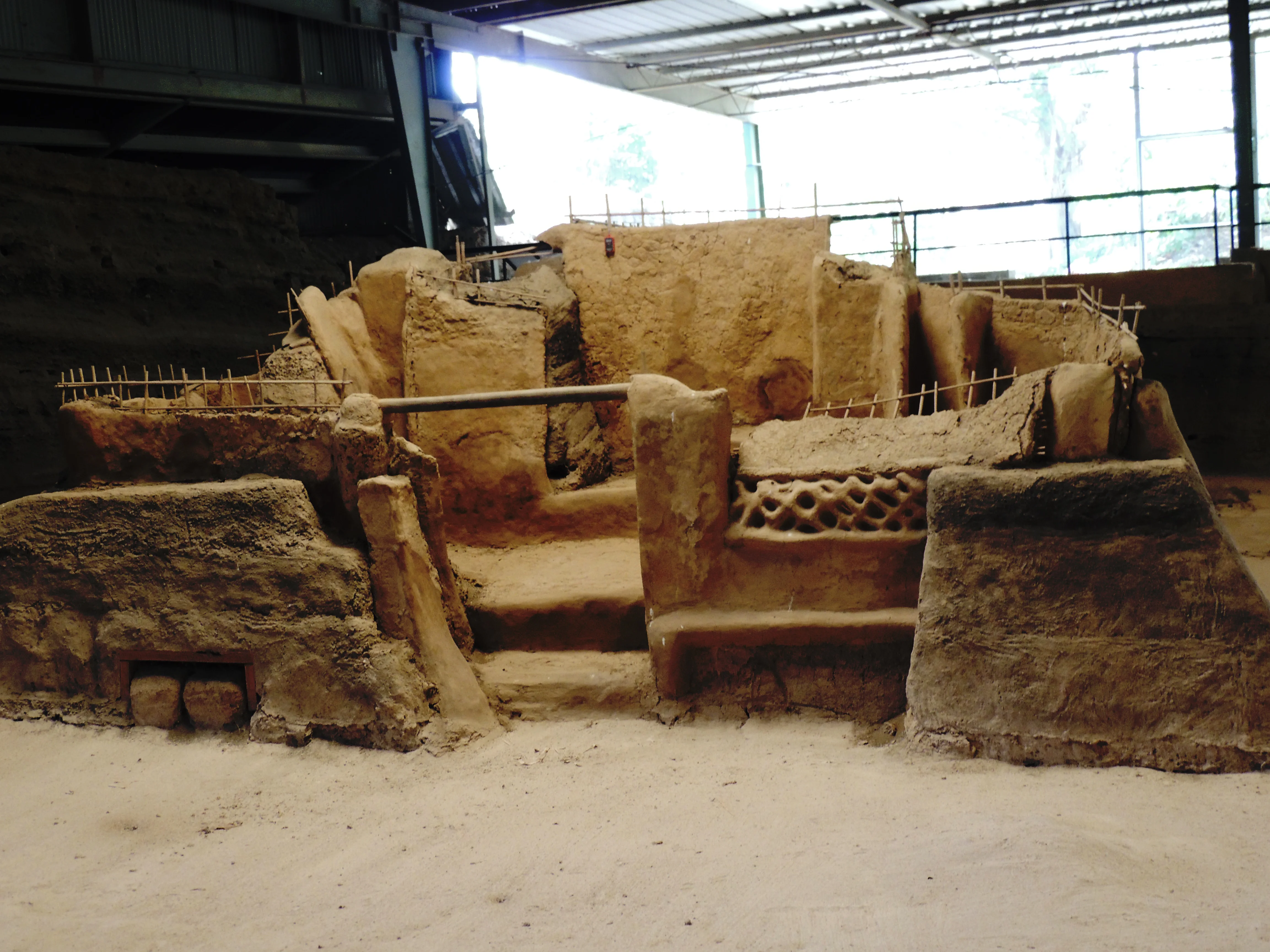
Joya de Cerén preserves a pre-Hispanic farming community buried by the eruption of Loma Caldera around the seventh century. Houses, work areas, a communal building, a temazcal and cultivated fields make ordinary life—not royal monuments—the focus. It is El Salvador's only inscribed UNESCO World Heritage property.
Protective roofs shelter the fragile earthen remains, and visitors view them from controlled walkways. Read the museum first or take the available guided interpretation; small details such as storage spaces and planted rows become meaningful with context. Never touch the structures or cross barriers.
The park is about 36 kilometres northwest of San Salvador, close enough to combine with San Andrés. Allow 90 minutes to two hours and go Tuesday through Sunday unless the Ministry announces otherwise. The sheltered circuit is manageable in rain, though humidity is precisely why conservation rules matter.
2. Tazumal
Tazumal is the most monumental surviving part of ancient Chalchuapa, a settlement with a long history and wide Mesoamerican connections. Its dominant stepped structure and adjoining remains create the country's most immediately dramatic archaeological view.
The compact park and museum work well with nearby Casa Blanca. Treat the reconstructed surfaces as protected heritage rather than a climbing frame, and allow exhibits to explain how the visible architecture changed through successive periods.
Tazumal sits inside modern Chalchuapa, roughly 80 kilometres west of the capital, so food and transport are easier than at a remote ruin. A guided circuit typically takes under an hour, but reserve longer for the museum and town. It is the strongest first stop for monumental Maya architecture.
3. San Andrés
San Andrés developed into an important regional center in the Zapotitán Valley, with plazas, pyramidal buildings and evidence of elite and administrative activity. Its open setting makes the relationship between architecture, volcanoes and fertile agricultural land especially clear.
Combine it with Joya de Cerén to compare a civic-ceremonial center with a rural household community. Shade can be limited; arrive earlier in the day and include the museum rather than judging the site only by exposed structures.
The park lies near the Pan-American Highway, making the two-site pairing practical with private transport or a tour. Plan at least an hour for its acropolis, plazas and exhibits. San Andrés is especially useful for understanding how elite, administrative and agricultural landscapes coexisted in the fertile valley.
4. Cihuatán
Cihuatán spreads across a hill overlooking the Acelhuate and Lempa valleys. Built after the Classic Maya collapse, it includes ceremonial precincts, pyramids, plazas and ball courts within what the Ministry of Culture describes as El Salvador's largest archaeological site.
Its scale rewards a slower walk, but heat and uneven ground make water and closed shoes essential. Stay on visitor paths, use the Antonio Sol museum for orientation and do not enter unmarked excavated or vegetated areas.
Because the park is around 36 kilometres north of San Salvador and receives fewer casual visitors, confirm opening before departure and arrange reliable return transport. Two to three hours lets you appreciate the city's footprint rather than rushing only to the main pyramid. Midday exposure is substantial.
5. Casa Blanca
Casa Blanca protects part of the much larger ancient Chalchuapa settlement and evidence extending back more than 3,000 years. It was an important early ceremonial area before the focus shifted toward Tazumal, making the two parks complementary rather than repetitive.
The park's quieter grounds encourage close attention to landscape and chronology. Ask whether interpretive or indigo-related activities are operating that day, and remember that neighboring El Trapiche is not automatically open visitor space.
Casa Blanca is only a short distance from Tazumal, and visiting both reveals how Chalchuapa's ceremonial focus shifted over centuries. The official circuit is compact, so allow about an hour plus any workshop. Choose it when you want deeper historical context without another long transfer.
Which archaeological site should you visit?
Choose Joya de Cerén for the clearest view of everyday ancient life, Tazumal for monumental architecture and Cihuatán for the broadest landscape walk. Visit San Andrés and Joya de Cerén together to compare communities in the Zapotitán Valley, or pair Casa Blanca and Tazumal for a deeper reading of Chalchuapa.
Visiting archaeological sites responsibly
- Confirm opening days, admission and guided-tour availability with the Ministry of Culture.
- Do not climb, touch or lean on archaeological structures.
- Keep food, liquids and bags away from fragile earthen remains.
- Never remove pottery, stone or plants, even when an object appears loose.
- Respect ceremonies and living Indigenous relationships with these places.