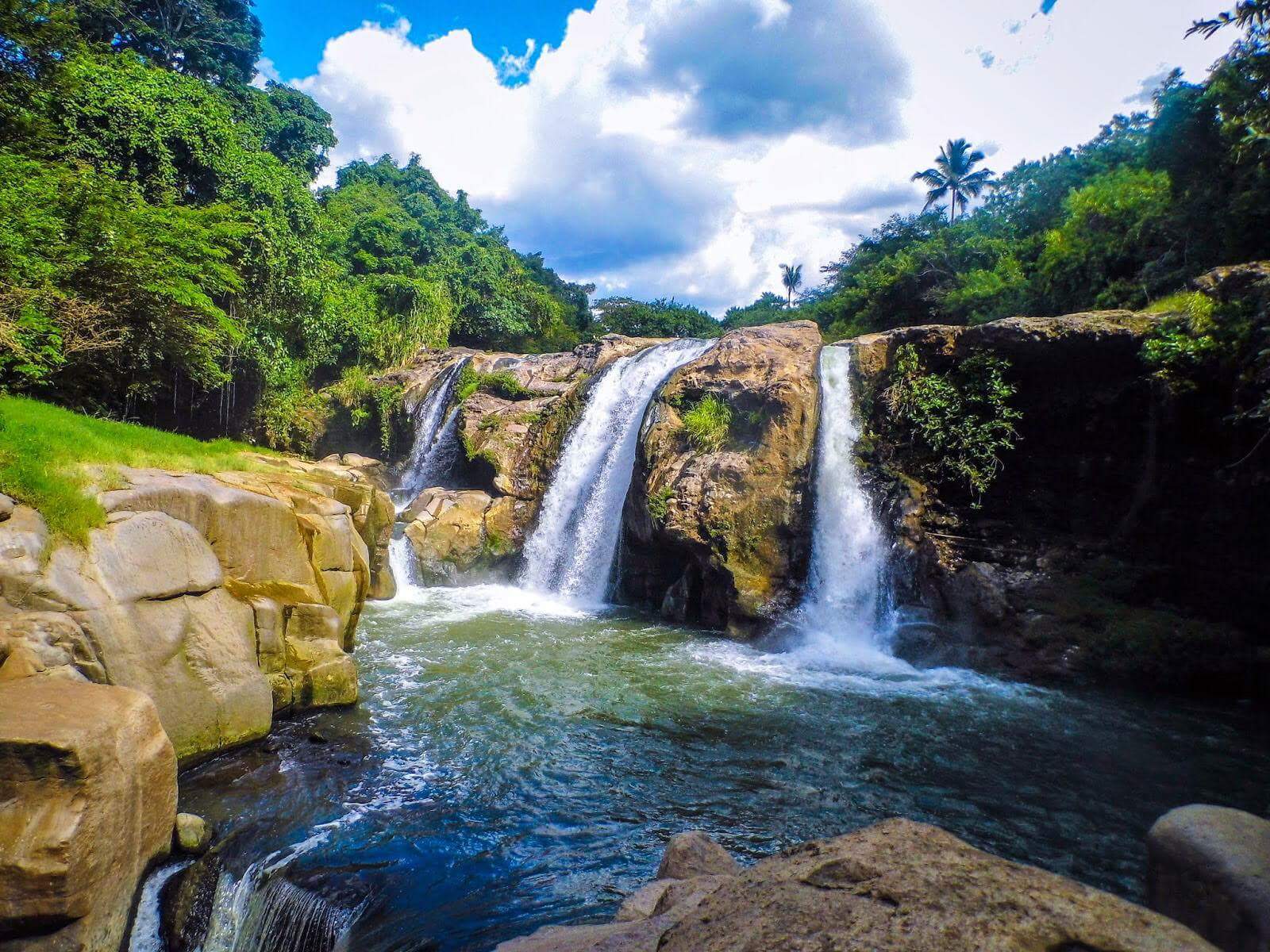

El Salvador's most memorable freshwater places are shaped by volcanic rock, springs and a sharply seasonal climate. Some require a canyon hike; others are managed pools or broad lakes where access is easier. Clear water never guarantees safe water: rainfall upstream can change depth, current and contamination before conditions look threatening at the entrance.
Ask the local manager or guide whether swimming is permitted that day. Never treat a waterfall lip, cliff jump or online video as proof of safety.
El Salvador waterfalls and swimming holes at a glance
| Place | Experience | Effort | Swim? |
|---|---|---|---|
| Tamanique | Canyon falls and pools | Moderate | Only where approved |
| Chorros de la Calera | Spring-fed cascades | Moderate | Conditions vary |
| Salto de Malacatiupán | Thermal cascade | Easy | Ask locally |
| Los Chorros | Managed spring pools | Easy | Designated pools |
| Lake Coatepeque | Volcanic lake | Easy | At managed access |
The 10 best waterfalls and swimming holes in El Salvador
1. Tamanique waterfalls
A steep trail from Tamanique reaches several cascades and rock pools in the coastal hills. The sequence makes an excellent half-day adventure from the La Libertad surf corridor, but the descent, heat and slippery return are more demanding than photographs suggest.
Hire a local guide, use shoes with grip and enter only the pool approved that morning. Cliff jumping can cause fatal injury when flood debris or shifting gravel changes depth.
The route runs roughly two kilometres beyond Tamanique and becomes steeper near the falls, with a rope-assisted section on some versions. Guides are commonly available around the central park, though advance contact is wise on weekends. Carry water for the hot climb back to town.
2. Chorros de la Calera
Spring water emerges through green rock above Juayúa, creating narrow cascades and pools within a lush ravine. Access practices have changed over time and may involve local guides or property arrangements, so confirm in town before walking out.
Recent rain makes paths slick and can affect water quality. Visit for the canyon setting first and swim only when the responsible local guide explicitly approves it.
Juayúa is the natural base, and local operators may include the falls in the longer Seven Waterfalls route or a shorter out-and-back. Ask which version you are booking, whether lunch is included and how wet the scrambling becomes. Pair it with the town rather than rushing onward immediately.
3. Salto de Malacatiupán
Near Atiquizaya, warm water from Río Agua Caliente meets Río San Antonio and drops through a cluster of thermal cascades. The unusual temperature and turquoise appearance make this one of the country's most distinctive water landscapes.
Use the established access, keep away from the lip and check water conditions locally. Warmth does not remove the hazards of current, submerged rock or sudden river rise.
The falls are about 20 minutes from central Atiquizaya followed by a short walk, making them an approachable western half-day. Visit earlier for cooler air and fewer people. There are three main drops of roughly 12 metres, but viewpoints and safe bathing zones can change with flow.
4. Los Chorros
This recreational park near Santa Tecla channels cool spring water into managed pools beneath wooded cliffs. It is more structured than a remote swimming hole and convenient from San Salvador.
Confirm that the park is open, because storms, rockfall or seismic events can require closures. Swim only in designated areas and follow capacity and lifeguard instructions.
Los Chorros works well for families because it offers facilities, managed pools and a short journey from San Salvador or Santa Tecla. Arrive near opening for quieter water and check rules on food, lockers and changing areas. This is recreation rather than a wilderness waterfall hike.
5. Lake Coatepeque
The immense volcanic lake offers swimming, kayaking and boating from hotels, restaurants and other managed access points. There is no single public beach experience, so decide where you will enter before arriving.
Use flotation away from shore, keep clear of motorboats and do not swim during storms or official water-quality advisories. A calm-looking lake can develop wind and chop quickly.
Access is fragmented among hotels, restaurants and clubs, so select a facility before travelling rather than expecting one central public beach. Ask about day-use fees, parking and kayak rental. An overnight stay provides a calmer morning window and time to enjoy the crater rim.
6. El Escuco waterfall
El Escuco falls through a green setting near Santo Domingo de Guzmán, a town known for living Náhuat culture and red-clay pottery. A local visit can combine the cascade with community workshops rather than treating the area as a quick photo stop.
Ask residents about the current path and approved bathing area. Support local guides, avoid soap in the river and carry out every item you bring.
Santo Domingo de Guzmán makes the visit culturally richer through Náhuat language initiatives and traditional red-clay pottery. Arrange the waterfall walk locally and leave time for an artisan workshop or meal. Conditions are most attractive after rain, but that is also when current demands greater caution.
7. Siete Cascadas
The Seven Waterfalls route near Juayúa links forest, coffee land and multiple cascades in a longer guided outing. Sections may involve wet rock, steep ground and assisted scrambling rather than a simple signed footpath.
Book an experienced local guide, disclose mobility concerns and expect the route to change after rain. This is best chosen for the journey between falls, not for maximizing swim time.
Full outings can occupy much of a day and may include steep coffee-farm paths, river crossings, ropes and scrambling beside cascades. Wear clothing that can get soaked and pack valuables in a dry bag. Verify whether transport, entrance permissions and food are included in the quoted price.
8. Laguna de Apastepeque
This small volcanic lagoon near San Vicente provides a gentler waterside day with recreational facilities and shaded surroundings. It is a useful alternative to a strenuous canyon walk.
Use managed entry points, check current swimming rules and keep children within reach. Avoid entering after heavy runoff or when staff advise against bathing.
The lagoon is close to San Vicente and suits travelers who prefer a picnic and short waterside break to a strenuous hike. Recreational facilities can be busier on weekends. Treat it as a local park visit and verify opening, water condition and available food before making a special journey.
9. Poza Verde at Apaneca
Poza Verde is a forested crater lagoon in the Apaneca highlands, reached on local walking and adventure routes. The reward is cool volcanic scenery rather than a developed swimming beach.
Arrange access locally, respect private land and do not enter the lagoon unless the site manager expressly permits it. Mud and mist can make the approach slippery.
Apaneca is the useful base, with guided hiking, cycling and buggy operators serving the surrounding lagoon landscape. Confirm whether a tour actually reaches Poza Verde or only a viewpoint. The cooler elevation calls for a light rain layer even when the coast is hot.
10. Lake Ilopango
The vast caldera lake east of San Salvador supports swimming and boat trips from established lakeside areas. Its scale creates attractive open-water views but also exposes visitors to depth, wind and boat traffic.
Choose a managed access point, wear flotation for paddling and remain close to shore unless accompanied by a qualified operator. Check local water and weather advice before entering.
Lakeside communities and businesses provide boat trips, food and designated entry, but facilities differ widely. A half-day is enough for a swim and viewpoint; allow longer for a guided boat excursion. The lake is deep and broad, so casual open-water crossings are inappropriate.
Which waterfall or swimming hole should you choose?
Choose Tamanique for a physical canyon outing, Chorros de la Calera for a Ruta de las Flores day and Malacatiupán for unusual thermal water. Los Chorros is the easiest managed option from the capital, while Coatepeque suits kayaking and a longer lakeside stay.
Combine Juayúa's waterfalls with nearby highland towns rather than rushing several slippery routes in one day. For a broader itinerary, see El Salvador's best adventure activities.
Before you go
- Ask about rainfall across the watershed, not only the sky above the pool.
- Swim only where the manager or guide explicitly permits it.
- Never cliff-jump or stand at a waterfall lip.
- Wear shoes with grip and protect electronics in a dry bag.
- Avoid soap, sunscreen slicks and food waste in natural water.
- Leave immediately if water rises, darkens or begins carrying debris.