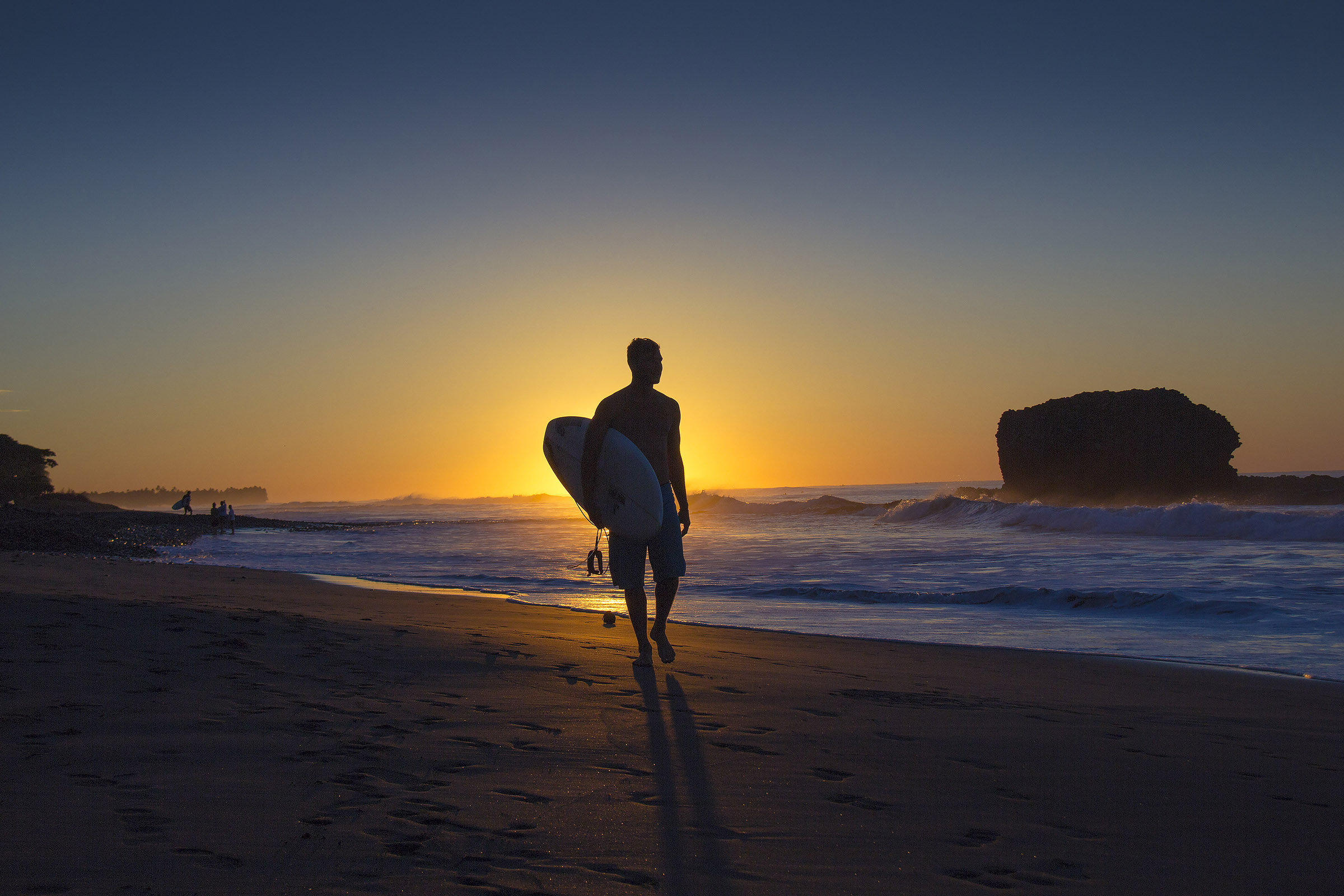

El Salvador's Pacific coast is defined by cobblestone points, volcanic rock and long right-hand walls. Warm water and short transfers make it tempting to improvise, but swell direction, tide, rocks and crowded takeoffs can transform the same break from friendly to serious.
The levels below describe typical character, not a guarantee. Ask a reputable local school or guide about the conditions that morning.
El Salvador surf beaches at a glance
| Beach | Wave character | Best suited to | Region |
|---|---|---|---|
| El Sunzal | Long right point | Improvers–advanced | La Libertad |
| Punta Roca | Fast right point | Advanced–expert | La Libertad |
| El Zonte | Points and beach peaks | Mixed levels | La Libertad |
| Las Flores | Long right point | Intermediate–advanced | East |
| El Tunco | Access to several breaks | Mixed levels | La Libertad |
The 10 best surf beaches in El Salvador
1. El Sunzal
El Sunzal produces long right-hand rides and is one of the coast's better places to progress with an instructor. The cobblestone entry, current and larger south swells still demand care. Start on a board and tide selected by a local school, not simply wherever the lineup is busiest.
The broad shoulder gives improving surfers time to trim and practise turns, but long-period swell can make it powerful. Stay in El Tunco or at El Sunzal for dawn access. Watch where locals enter, expect a longer paddle than it appears from shore and consider reef-aware water shoes.
2. Punta Roca
La Libertad's famous right point is fast, powerful and shallow over rock in places. It belongs to advanced surfers who can control a board in a crowded lineup. Secure belongings ashore, respect the local rotation and sit out conditions beyond your experience.
The wave can connect through several fast sections toward town. Stay in La Libertad for the quickest dawn check, when wind is often cleaner. A local guide is valuable for entry timing and etiquette; falling early can mean a long hold-down and a difficult exit across rock.
3. El Zonte
El Zonte offers a compact surf base with right points and more approachable lesson areas when swell permits. Different peaks suit different abilities, so newcomers should not follow experienced surfers onto the main point. Rock-aware footwear helps at low tide.
The village is quieter than El Tunco but has schools, rentals, cafés and accommodation within walking distance. Stay several nights so an instructor can select the safest tide and peak. It works well for travelers who want a walkable surf community without a strong nightlife focus.
4. Las Flores
Near El Cuco, Las Flores wraps into a scenic bay as a long right point. Smaller days can suit confident intermediates, while solid swell becomes fast and consequential. The takeoff is concentrated; communicate, wait your turn and avoid dropping in.
Lodging beside the point maximizes water time, while El Cuco offers more everyday services. Build in at least three nights because a single fixed surf day can be spoiled by wind or oversized swell. Boat trips to Punta Mango should be arranged with an experienced local operator.
5. El Tunco
El Tunco is the main social and accommodation hub, with access to La Bocana, El Sunzal and nearby breaks. La Bocana's river-mouth wave is powerful and not a beginner lesson spot. Choose a school that drives or walks students to the safest break for that day's conditions.
This is the easiest coastal base without a car: restaurants, shops, rentals and shuttles cluster in a small area. Weekends can be crowded and noisy, so sleep toward the edge of town if that matters. Swimmers should stay clear of active surf zones and river-mouth current.
6. Punta Mango
Punta Mango is a hollow eastern right with a rock bottom and less immediate access. Experienced surfers often reach it by boat or rough road from the El Cuco area. Bring repair essentials and do not confuse remoteness with an uncrowded entitlement.
The wave demands quick takeoffs and confidence over shallow rock. Confirm whether a boat trip includes flotation, shade, drinking water and a fallback plan. Services at the break are limited, and an injury or broken board is much harder to solve than on the La Libertad coast.
7. K59
K59 is a consistent right point west of El Zonte, with rock entry and limited public infrastructure. It suits competent surfers comfortable managing currents and takeoff etiquette. Confirm legitimate access and avoid leaving valuables visible in a vehicle.
South Pacific swell is usually strongest from roughly March through August, when the point can hold serious size; late-year sessions are often smaller but still unsuitable for novices. The cliff complicates exits at high tide. Stay locally or arrive self-contained from La Libertad.
8. Mizata
Mizata combines a quieter coastal setting with several surfable sections, including a designated surf side described by the tourism authority. Local knowledge matters because rock, river flow and swell distribute energy differently along the beach.
It lies near the La Libertad–Sonsonate boundary, beyond the main surf-town cluster, so staying overnight is easier than relying on frequent transport. Ask lodging which peak suits the tide. The sandy side offers downtime, but swimmers must still assess shorebreak and current.
9. El Palmarcito
This smaller cove can provide a manageable alternative when neighboring points are too exposed, but it is not always gentle. Take a lesson, watch several sets and keep swimmers and surfers separated in the compact bay.
The break offers a short right and occasional left over a semi-rocky bottom, with softer whitewater in the center on suitable days. At about kilometre 51 of the coastal highway, it is easy to reach from El Tunco. It tends to close out once waves exceed the cove's comfortable size.
10. El Cuco
El Cuco's broad dark-sand beach is the eastern region's practical base and can offer beach-break sessions between trips to Las Flores or Punta Mango. Sandbars and current change; beginners still need supervision, especially during larger wet-season swell.
Choose El Cuco for food, transport and a conventional beach-town stay, then arrange guided sessions at nearby points. The exposed beach can be less predictable than a point break, so identify rips before paddling out. Early morning generally brings cleaner surface conditions.
Which El Salvador surf beach should you choose?
Choose El Sunzal or an instructor-selected El Zonte peak to improve, Punta Roca for a high-performance objective and Las Flores for a longer eastern stay. El Tunco has the widest choice of services and nightlife, while Mizata suits travelers seeking a quieter base.
The south-swell season commonly brings more size from roughly April into October; smaller dry-season conditions can be friendlier but are never guaranteed. Wind is often lighter early, so leave space to surf when the ocean cooperates.
Surf safety and etiquette
- Take a lesson if you cannot confidently identify current, priority and safe entry points.
- Use a leash and a board appropriate to the crowd and wave power.
- Never ditch a board where another surfer is behind you.
- Ask before crossing private property and support locally based guides and businesses.
- Do not paddle into a concentrated point lineup until you understand its rotation.