

Slovenia's Karst gave the scientific landscape its international name. Rivers vanish underground, vast chambers open beneath forest and caves preserve rare animals and archaeological evidence. Beyond the classic show caves, former mines create unusual guided journeys by kayak, bicycle and underground train.
Every cave has its own access rules. Enter only through authorized tours, bring warm layers and never treat a small opening beside a trail as permission to explore.
Slovenia underground at a glance
| Experience | Region | Style | Main limitation |
|---|---|---|---|
| Škocjan Caves | Karst | Underground canyon | Timed guided access |
| Postojna Cave | Karst | Train and walking | Fixed visitor circuit |
| Križna Cave | Inner Carniola | Cave boating | Strict group limits |
| Mount Peca mine | Koroška | Underground kayaking | Advance booking |
| Idrija mercury mine | Idrija | Historic mine walk | Guided route only |
| Predjama | Karst | Castle and cave | Seasonal cave access |
The 8 best underground experiences in Slovenia
1. Cross the underground canyon at Škocjan
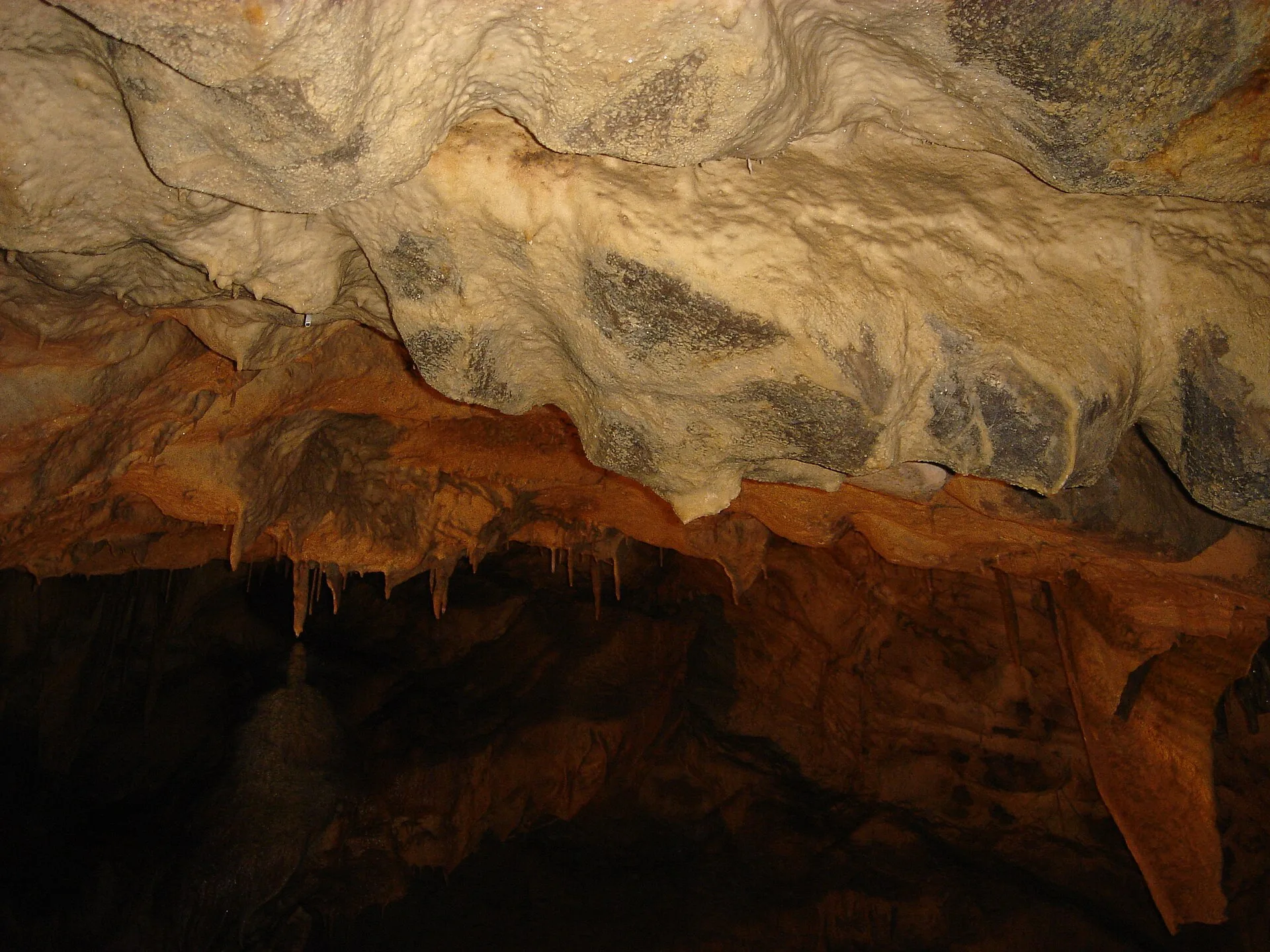
The Reka River cuts an immense canyon beneath Škocjan, crossed on the official route by paths and bridges high above the water. The chamber's scale makes the visit feel exploratory even within managed infrastructure.
Book an authorized departure, follow photography rules and wear grippy shoes. Continue on a surface education trail to see the sinkholes and villages connected to the underground system.
2. Ride Postojna's cave railway
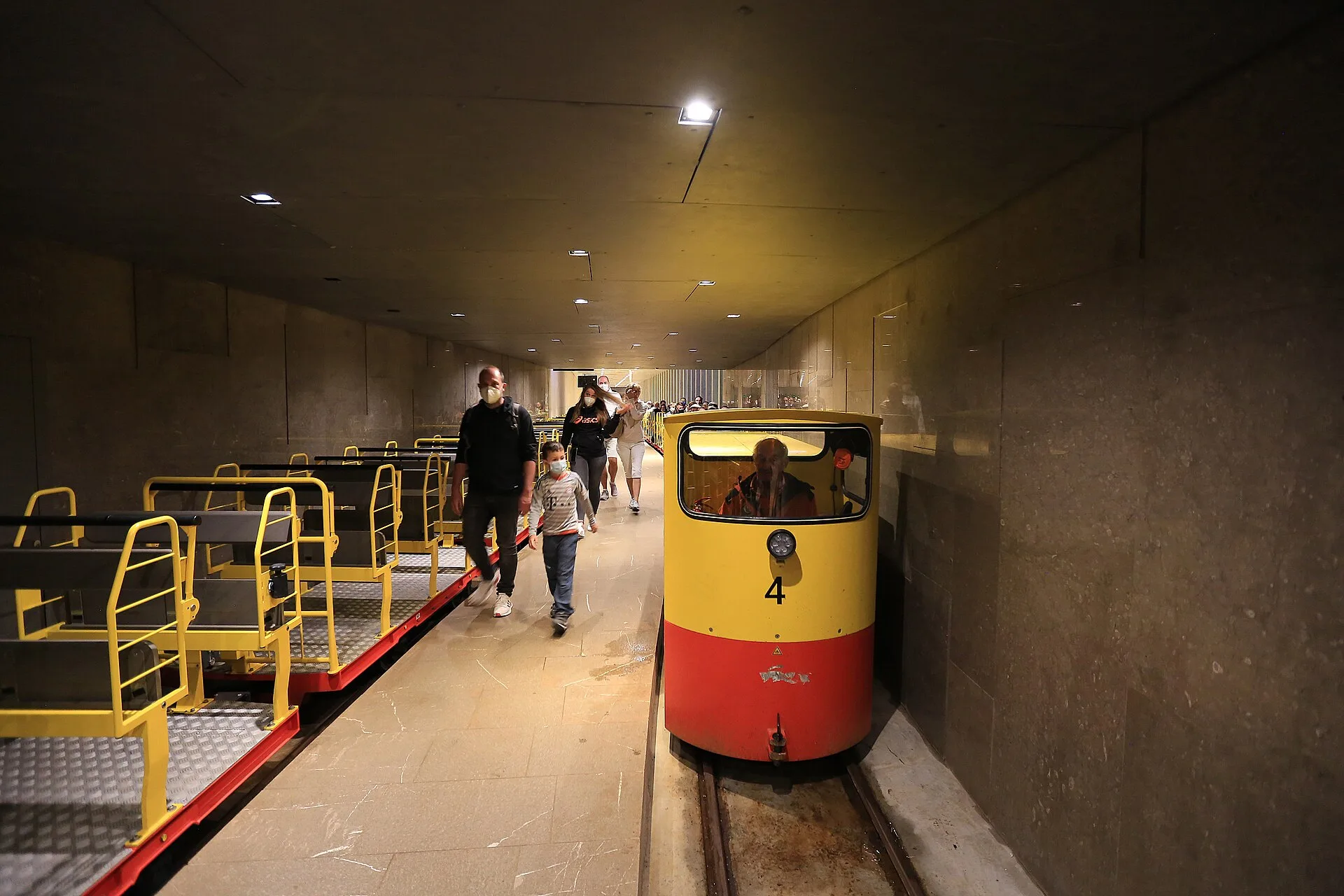
Postojna's historic railway carries visitors into an extensive cave system before a guided walk through decorated chambers. It is the country's most accessible introduction to subterranean geology and the olm.
Use the official circuit, bring a warm layer and never touch formations. Busy departures can feel commercial, but slowing down during the walking section reveals the cave's real complexity.
3. Boat across Križna Cave
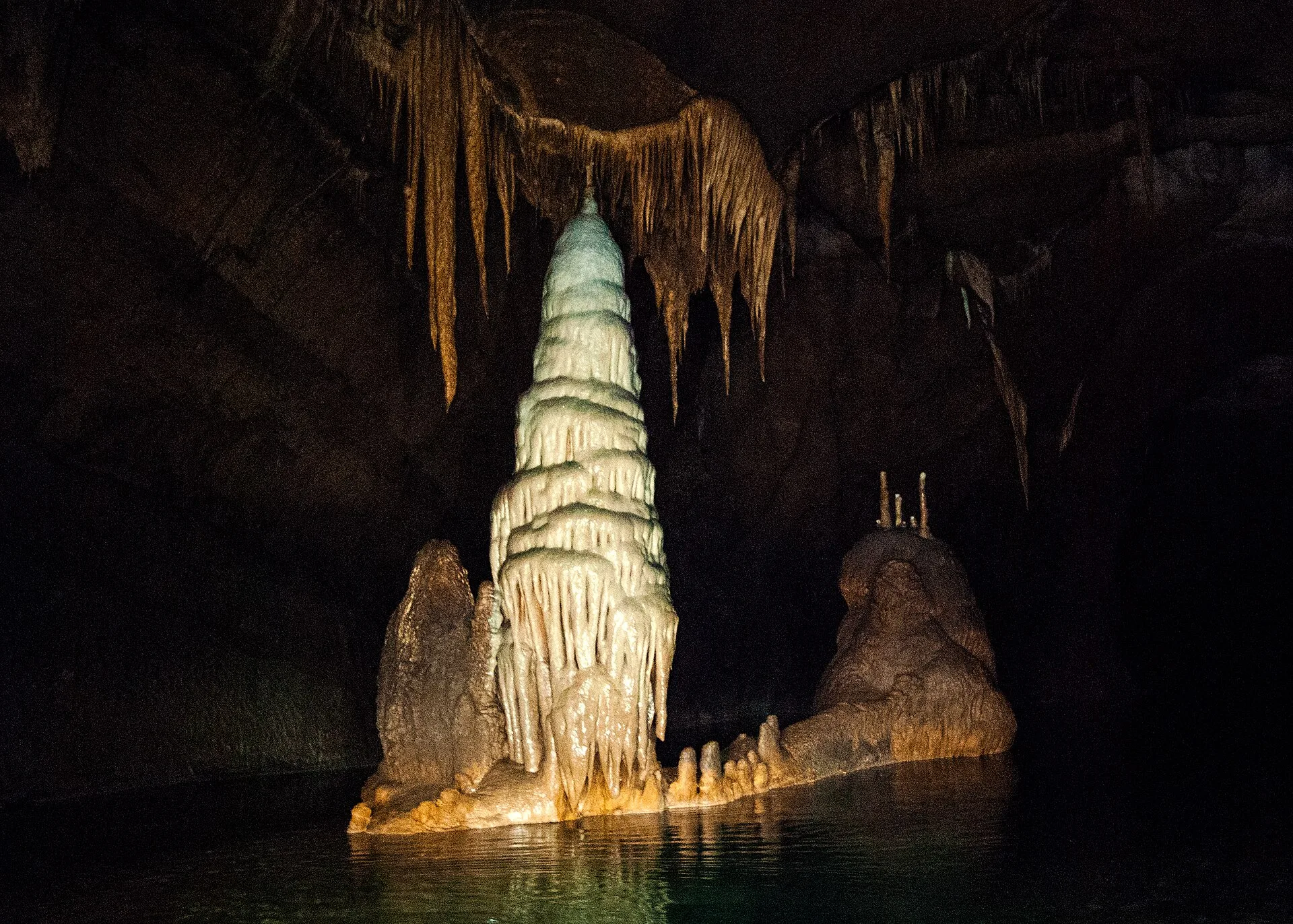
Križna Cave contains a chain of clear underground lakes. Short visits reach the first lake, while longer boating tours operate with very small groups and tighter conservation limits.
Reserve the exact itinerary well ahead and meet its physical requirements. Use only supplied equipment, leave bones and formations untouched and expect cold darkness rather than installed spectacle.
4. Kayak the flooded Mount Peca mine
Guided groups travel deep into former lead and zinc workings before paddling flooded galleries beneath Mount Peca. The combination of industrial history, confined passages and still water is unique in Slovenia.
Book through the official mine experience, wear all protective equipment and disclose claustrophobia before entering. Follow the guide without separating; this is a controlled underground route, not recreational open-water kayaking.
5. Descend Anthony's Shaft in Idrija
Anthony's Shaft introduces the former mercury mine beneath Idrija through preserved tunnels, equipment and working history. The guided descent explains how the town and its UNESCO-listed mining heritage developed together.
Use the official tour and follow helmet and movement instructions. Mercury history includes severe human and environmental consequences, so approach it as industrial interpretation rather than an atmospheric tunnel alone.
6. Explore Predjama's castle-cave setting
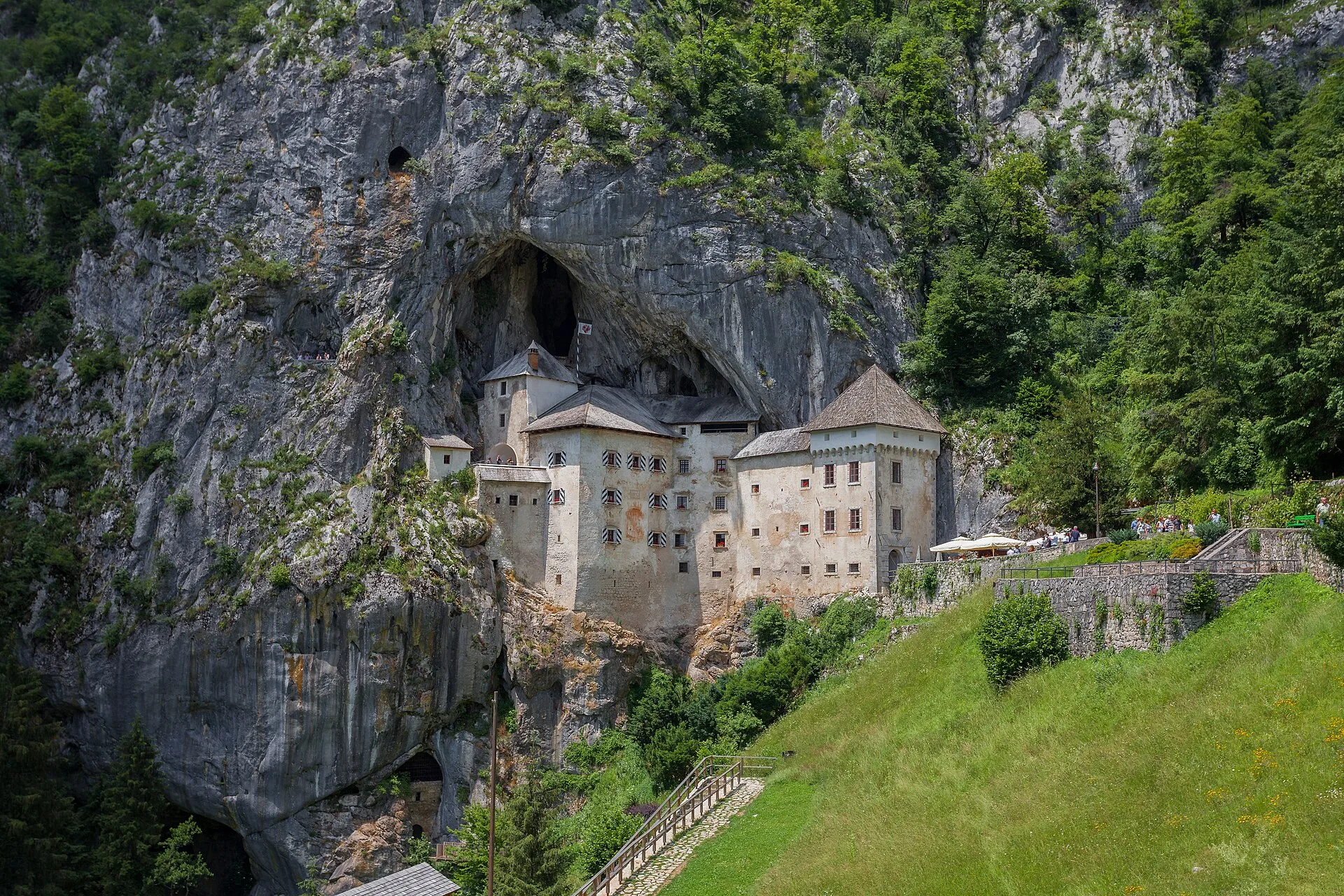
Predjama Castle is built into a cliff above a multi-level cave system. Standard visits focus on the architecture, while seasonal guided cave tours reveal how the underground passages shaped defense and legend.
Check which cave route is operating and what equipment or fitness it requires. Bat protection limits access during parts of the year. Never leave the managed route to search for alleged secret passages.
7. Walk Vilenica Cave
Vilenica is one of Europe's oldest documented show caves and descends through decorated chambers in the classical Karst. Its long cultural association with literature gives it a different identity from the larger systems nearby.
Confirm tour times, wear stable footwear and prepare for stairs and cool air. Combine it with a surface Karst walk or local village stay instead of treating caves as interchangeable roadside stops.
8. Cross the natural bridges of Rakov Škocjan
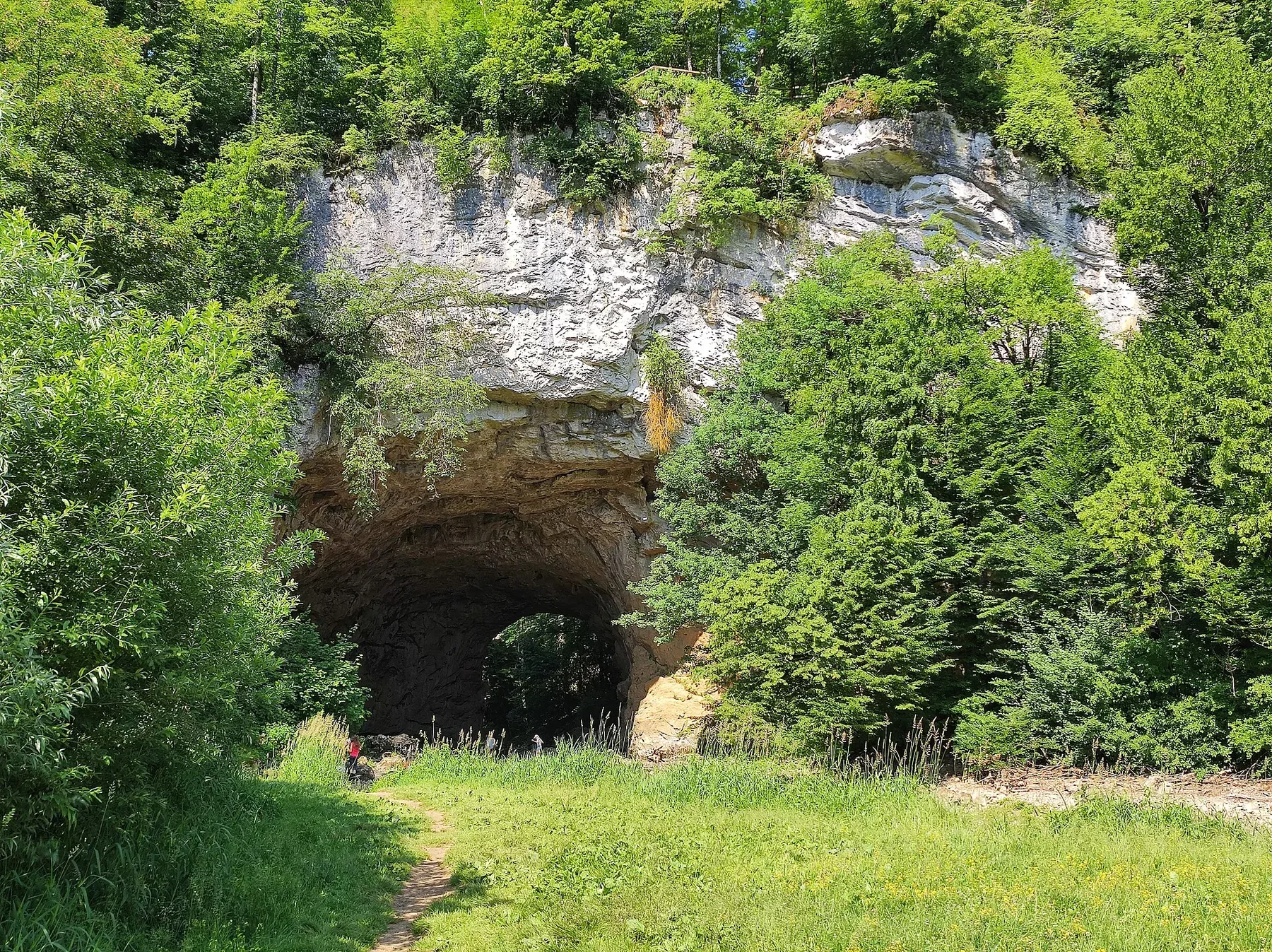
At Rakov Škocjan, the roof of an older cave system has collapsed into a forested valley, leaving large and small natural bridges above a disappearing stream. It is the best place to read underground processes from the surface.
Use marked paths and keep out of unapproved cave openings. Water level changes the landscape and rain makes rock slippery. No rope, light or confidence substitutes for authorization in deeper passages.
Choosing a cave experience
Choose Škocjan for monumental scale, Postojna for accessibility, Križna for low-impact boating and Mount Peca for active adventure. Idrija and Predjama connect underground terrain with human history, while Rakov Škocjan is a surface hike through Karst processes.
Continue with Slovenia's adventure activities, best hikes and waterfalls and gorges.
Underground rules
- Enter only on authorized routes with the required guide.
- Wear warm layers and footwear with reliable grip.
- Never touch formations, bones or cave animals.
- Respect bat-season closures and group limits.
- Discuss claustrophobia and mobility before booking.