
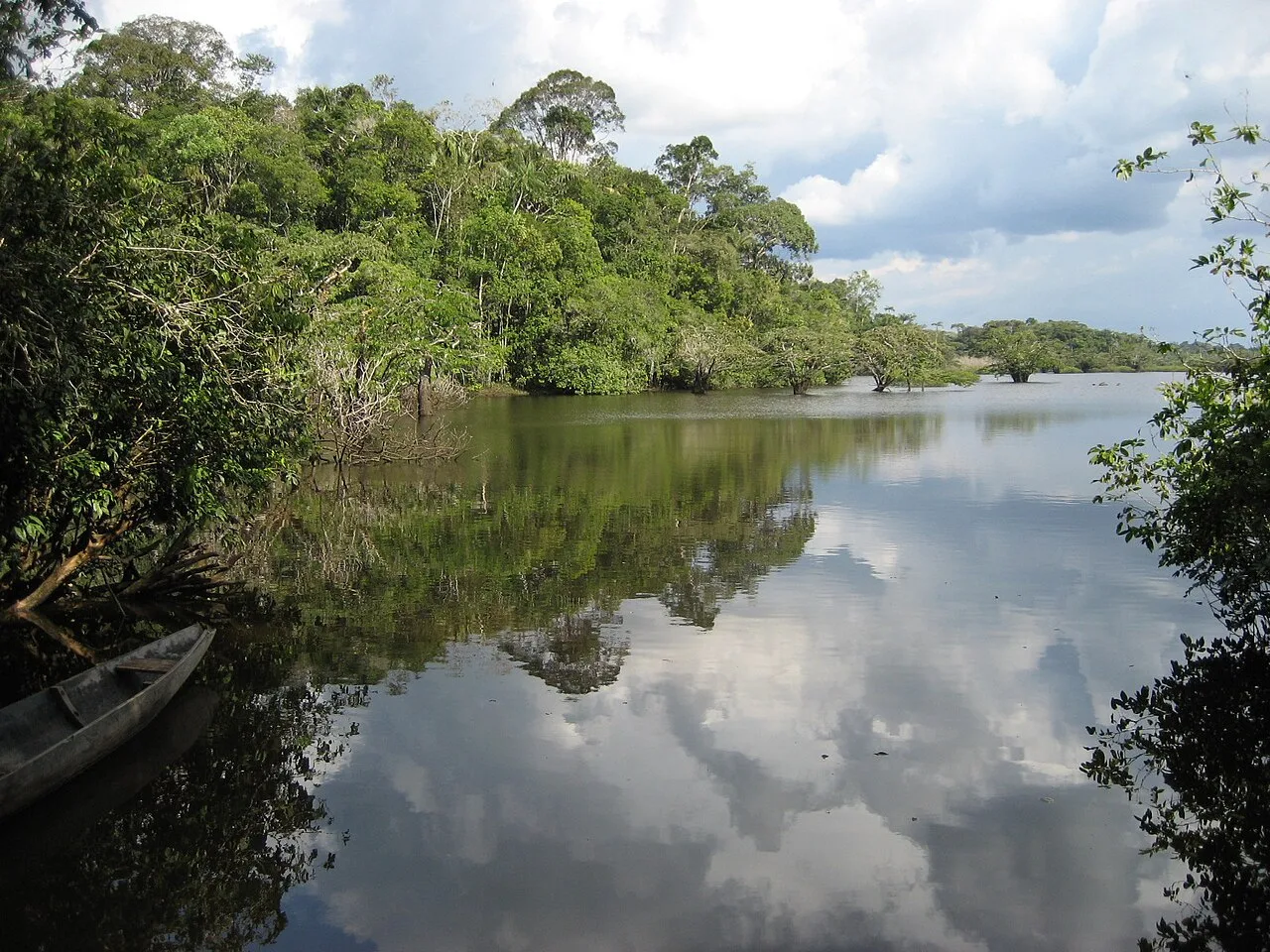
Ecuador includes several wildlife-rich regions: the Galápagos, the Amazon, Chocó cloud forest, high Andean páramo and the tropical Pacific. Plan around the habitat and season, and keep a respectful distance from wildlife.
Choose tours that leave animals wild. Feeding, touching or baiting them, and taking captive-animal photos, undermine conservation even when advertised as rescue or education. In protected areas, follow your guide and the visitor limits.
Ecuador wildlife at a glance
| Experience | Region | Best approached by | Main safeguard |
|---|---|---|---|
| Flooded-forest wildlife | Cuyabeno | Canoe | Quiet, authorized travel |
| Amazon canopy and lakes | Yasuní | Community lodge | Local authority |
| Cloud-forest birds | Mindo region | Hide and trail | No excessive playback |
| Marine wildlife | Galápagos | Guided boat/snorkel | Distance and site rules |
| Humpback whales | Pacific coast | Authorized boat | No chasing |
| Andean condors | Antisana | Viewpoint and trail | Long observation range |
The 10 best wildlife experiences in Ecuador
Paddle Laguna Grande in Cuyabeno
In Cuyabeno, guides take canoes through flooded forest and open water to look for monkeys, birds, caimans and river dolphins. Water levels determine which routes are available and shape what you see.
Stay at an authorized lodge or travel with an authorized operator. Wear flotation and keep noise down. Spend several nights to watch wildlife at dawn and dusk without rushing. Avoid stops that involve handling an anaconda, sloth or other captive animal.
View in GoExploringExplore Yasuní from Añangu
Around Añangu, community-connected operators organize canoe trips, forest walks and canopy observation in the Yasuní region. Kichwa guides explain animal signs, plants and how the ecosystem works, adding context beyond a species checklist.
Follow community rules for access and photography, and ask how fees are shared. Do not pressure guides to approach wildlife. A longer stay gives you more time to observe without trying to force an encounter into one outing.
View in GoExploringWatch cock-of-the-rock in cloud forest
At established leks northwest of Quito, male Andean cock-of-the-rock gather at dawn to call and display. Nearby reserves are also home to toucans, tanagers, antpittas and hummingbirds across a wide elevation range.
Watch from a controlled hide or with a small guided group. Arrive quietly and do not use flash. Keep playback to a minimum and never use it to draw birds away from their normal behavior. Locally run reserves use entrance fees to help protect the forest.
View in GoExploringWatch condors around Antisana
The high grasslands and cliffs around Antisana are home to Andean condors, carunculated caracaras, Andean ibis and herds of white-tailed deer. Laguna La Mica and managed viewpoints offer places to watch without going near nests.
Bring binoculars or a long lens and stay on public routes. Condors travel long distances, so a sighting is never assured. Add a páramo walk and conservation interpretation instead of driving from place to place after birds.
View in GoExploringSnorkel Los Túneles
Off Isabela, lava arches and shallow channels shelter turtles, rays, fish and resting seabirds. The site feels close to the wildlife, so keep your distance.
Travel with an authorized Galápagos operator and naturalist guide. Do not stand on lava, crowd animals or block their path through a channel. The boat crossing can be rough, and access depends on sea conditions.
View in GoExploringSnorkel at León Dormido
León Dormido rises offshore from San Cristóbal. Snorkelers may see turtles, rays and sharks in the channel between its rocks. Currents and open water make this more challenging than snorkeling from a beach.
Choose an authorized operator that checks your swimming ability and provides suitable flotation. Stay with the group and let marine life pass. No responsible crew can guarantee hammerheads or any other species on a particular day.
View in GoExploringWalk North Seymour
The regulated trail on North Seymour passes frigatebirds, blue-footed boobies, marine iguanas and dry-zone habitat. Birds may nest or court close to the path. Give them space.
Follow your naturalist guide, let animals pass first and secure loose equipment. Regulated itineraries assign landing times and sites, limiting independent visits to the island.
View in GoExploringWalk Punta Suárez on Española
Punta Suárez on Española is home to cliff-nesting seabirds, iguanas and seasonal waved albatross. Uneven lava and heat make the trail more demanding than its length suggests.
Check the season if you mainly want to see albatross, but take time to notice the whole ecosystem. Stay on the trail and do not use food or sound to influence wildlife. Follow your guide's distance instructions, even when you want a photograph.
View in GoExploringWatch humpback whales from Puerto López
Humpback whales visit Ecuador's Pacific waters at certain times of year. Authorized boats leave Puerto López to watch them. Give mothers and calves extra space. Rough water may cancel trips.
Choose a crew that approaches slowly, does not surround whales and never races to get closer. Wear flotation, and be prepared for a trip without close sightings. Visit Machalilla National Park as well, so the day offers more than whale watching.
View in GoExploringCanoe through Isla Corazón's mangroves
Near Bahía de Caráquez, community guides take canoes through Isla Corazón's mangroves, home to frigatebirds and other estuary wildlife. The small boats and local guides offer a quieter coastal trip than a fast wildlife boat.
Follow the tide-based schedule and stay away from roosts and nests. Support the community organization that manages access. Do not use playback near colonies, and take all waste back to shore.
View in GoExploringChoosing a wildlife experience
Choose Cuyabeno or Yasuní for several nights in the rainforest, the Mindo region for focused birding, Antisana for high-Andean species, or the Pacific coast for seasonal whales and mangroves. Galápagos visits follow a separate regulated itinerary and biosecurity plan.
Continue with Ecuador's adventure activities, best hikes and volcano experiences.
Responsible wildlife rules
- Never touch, feed, bait or crowd a wild animal.
- Choose authorized operators and community-run reserves.
- Keep voices low and avoid excessive bird-call playback.
- Follow Galápagos distances, biosecurity and marked routes.
- Treat sightings as possibilities, never guarantees.