

Portugal's Atlantic coast offers surf for every level, but not at the same beach on the same day. Sandbars move, reefs become exposed at low tide and winter swell can turn a lesson beach into expert water. The right choice comes from matching ability to the current wind, tide and wave period.
Beginners should book a qualified local school that can move sessions to suitable conditions. Famous names such as Nazaré and Supertubos are not progression shortcuts.
Portugal surf at a glance
| Beach or area | Region | Best for | Main caution |
|---|---|---|---|
| Praia do Amado | Western Algarve | Lessons and mixed levels | Rip currents |
| Arrifana | Western Algarve | Sheltered sessions | Rocks and crowding |
| Baleal | Peniche | Beginner flexibility | Changing sandbars |
| Supertubos | Peniche | Advanced barrels | Powerful shorebreak |
| Ribeira d'Ilhas | Ericeira | Intermediate point surf | Reef and priority |
| Praia do Norte | Nazaré | Expert tow surfing/viewing | Extreme waves |
The 10 best surf beaches in Portugal
1. Praia do Amado
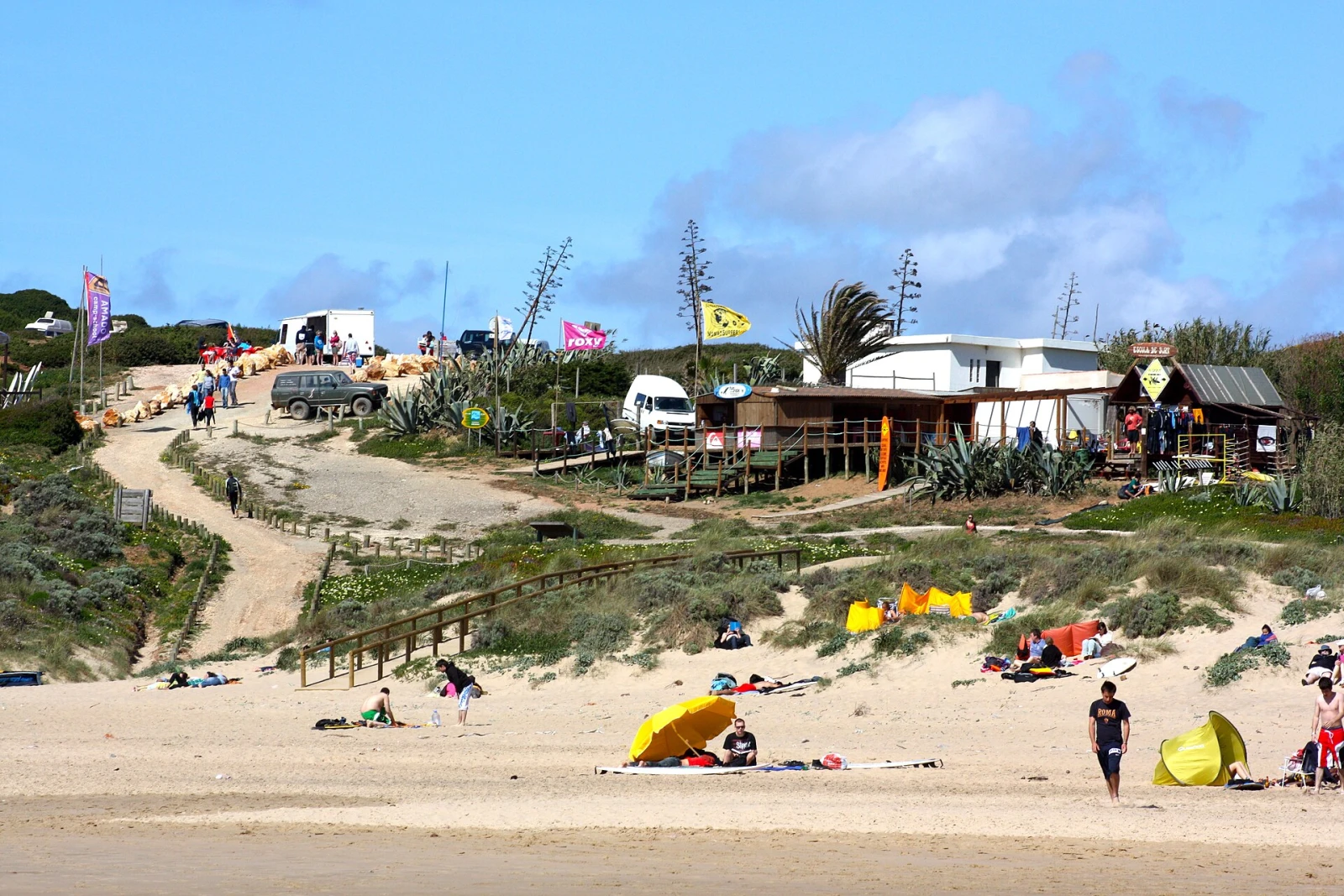
Amado's broad bay and established schools make it one of the western Algarve's most practical learning bases. Different peaks can serve several levels when swell and wind cooperate.
Use an instructor to identify rips and the right sandbar. The open Atlantic still produces strong current, so beginners should not paddle beyond the supervised area.
2. Arrifana
High cliffs shelter Arrifana from some wind, while a defined beach and point setup can create cleaner conditions than the exposed coast nearby. It is popular with lessons and independent surfers.
Crowding, rocks and access logistics require patience. Ask a local school which part of the bay matches your level and never block the narrow road or emergency access.
3. Baleal
The Baleal peninsula creates beaches facing different directions, allowing schools around Peniche to seek a workable lesson zone under varied wind and swell. This flexibility is more valuable to beginners than one famous peak.
Follow the instructor's beach choice, understand rips and keep clear of advanced clusters. Conditions can differ dramatically across the peninsula within the same hour.
4. Supertubos
South of Peniche, Supertubos produces fast, hollow beach-break waves that host elite competition. It is an advanced break whose heavy shoreward tubes punish hesitation and poor positioning.
Observe from land unless you have strong barrel, current and crowded-lineup experience. A surf trip to Peniche offers many safer alternatives; reputation is not a reason to enter unsuitable water.
5. Ribeira d'Ilhas
This right-breaking reef near Ericeira provides long walls and several takeoff zones under suitable swell. It is one of the more approachable reefs in the World Surfing Reserve for competent intermediate surfers.
Learn the entry, reef depth and priority from a local instructor. Wear suitable protection and do not snake around the established lineup. Beginners should remain at a sandy alternative.
6. Coxos
Coxos is a powerful, high-quality right point over reef near Ericeira. Its speed, rocks and concentrated takeoff make it an expert wave rather than the next step after a few successful lessons.
Seek local knowledge and watch several sets before considering entry. Respect priority absolutely. On unsuitable days, explore the reserve from shore or surf a beach selected for your actual level.
7. Carcavelos
Close to Lisbon, Carcavelos becomes a convenient urban surf beach when autumn and winter swell reaches the coast. Multiple peaks and public transport access make it useful, but quality brings crowds.
Check water quality after heavy rain, secure belongings and keep within a suitable peak. Summer can be small, while larger winter days produce strong rips and hollow sections.
8. Costa da Caparica
South of the Tagus, a long line of beaches and groynes creates numerous peaks used by Lisbon-area surf schools. The scale helps operators find a section suited to beginners on many ordinary days.
Do not select a peak only because parking is easy. Groynes and currents change the risk, so follow local advice and stay visible to the instructor.
9. Guincho
Guincho's exposure near Cascais makes it a major windsurf and kitesurf location, with surfing possible when wind and swell align. The dramatic setting comes with persistent wind and active current.
Ordinary surf beginners should use a calmer school beach. Wind or kite users need qualified instruction, appropriate zones and complete awareness of other people on the water.
10. Praia do Norte at Nazaré
Praia do Norte can amplify long-period swell through the Nazaré Canyon, producing waves ridden by specialist big-wave teams using skis, safety crews and detailed forecasting. It is primarily an observation experience for almost every traveler.
Watch from official land viewpoints and obey storm barriers. Never enter the shorebreak or cliffs during extreme conditions. Conventional surfers can use other regional beaches on appropriately sized days.
Choosing a Portugal surf base
Choose the western Algarve for a quieter multi-beach trip, Peniche for maximum exposure options, Ericeira for reef and point progression, and the Lisbon coast for short accessible sessions. Match the season and daily break to skill rather than choosing on fame.
Continue with Portugal's adventure activities, best hikes and volcanic landscapes.
Before paddling out
- Ask about tide, rips, rocks and the correct entry and exit.
- Use a qualified school and suitable foam board when learning.
- Wear the right wetsuit and a sound leash.
- Respect lineup priority and designated kite or swim zones.
- Treat Nazaré's biggest days as an expert operation viewed from land.