
Iceland's waterfalls are most rewarding when the walk explains the river and landscape around them. Some emerge from lava, some cut deep canyons and others form a chain along a mountain route. Their accessibility can be deceptive: spray freezes, paths erode and river edges collapse.
Use the official viewpoint and obey winter closures. No photograph justifies crossing a barrier, approaching an undercut edge or walking onto shelf ice.
Iceland waterfalls at a glance
| Waterfall | Region | Best experience | Main caution |
|---|---|---|---|
| Dynjandi | Westfjords | Multi-cascade walk | Wet, steep path |
| Dettifoss | Northeast | Canyon viewpoint | Seasonal road access |
| Glymur | West | Half-day canyon hike | River crossing |
| Seljalandsfoss | South | Walk behind the fall | Spray and ice |
| Svartifoss | Skaftafell | Basalt hiking circuit | Falling rock |
| Hengifoss | East | Geological cliff hike | Exposed path |
The 10 best waterfalls in Iceland
1. Climb beside Dynjandi
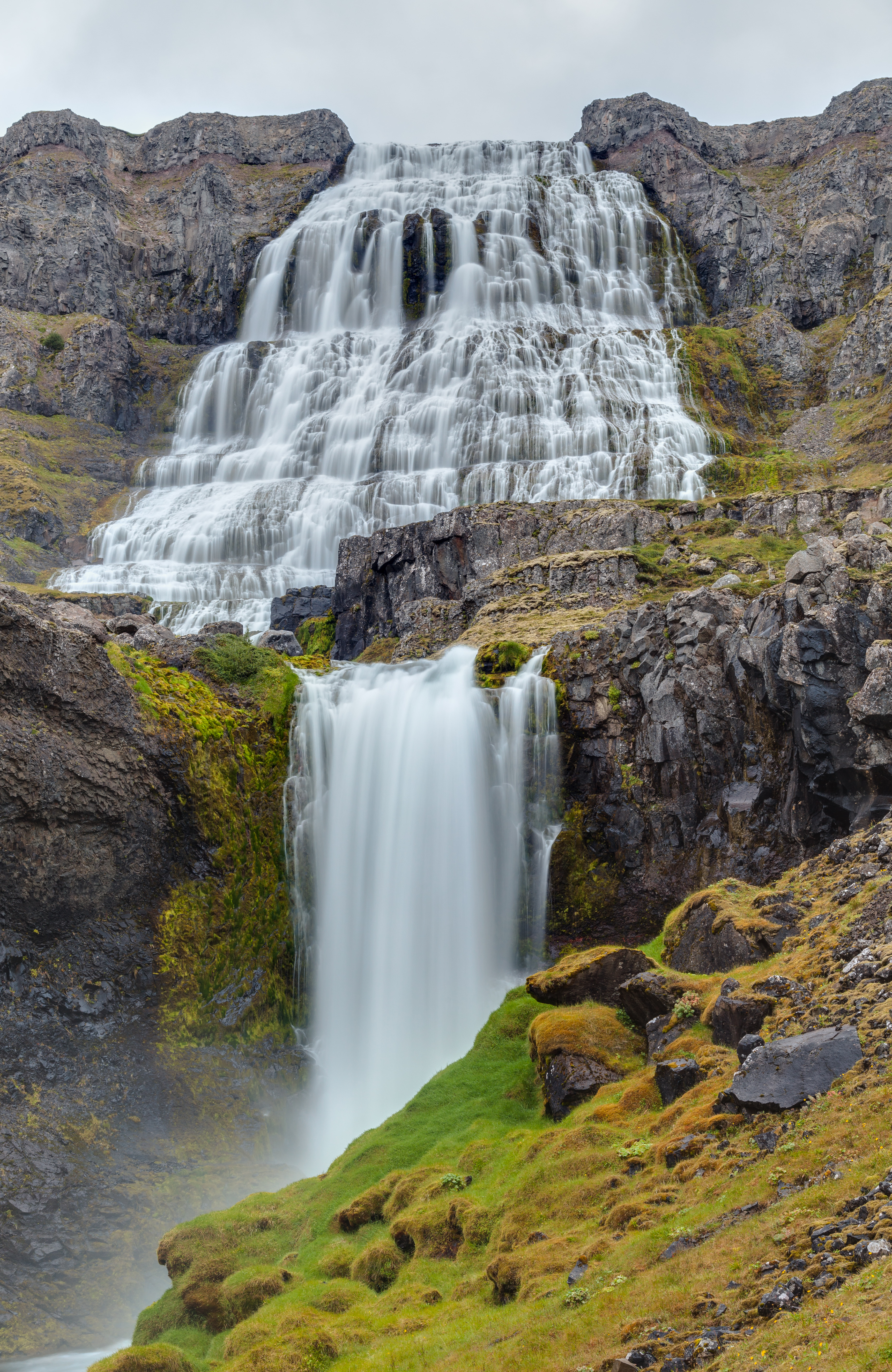
Dynjandi spreads across a broad rock face above several smaller cascades in the Westfjords. The path climbs from the shore past each stage toward the main fall.
Wear waterproof footwear and stay on the route to limit erosion. Wind and spray make upper sections slippery. Allow time for the fjord journey rather than treating it as a quick roadside stop.
2. Watch Dettifoss
Dettifoss carries a huge glacial river into Jökulsárgljúfur canyon. East and west approaches use different roads and viewpoints and should not be treated as interchangeable turnoffs.
Check which road is open and choose one side before driving. Stay behind barriers and off wet rock. Continue to a marked canyon trail only with enough daylight and suitable conditions.
3. Hike to Glymur
Glymur falls into a narrow, green canyon reached by a route involving steep ground and, seasonally, a river crossing. The hike provides far more context than a distant viewpoint.
Confirm crossing conditions, wear capable shoes and keep away from the rim. Return on the same bank when the full loop is unsafe. Winter requires a separate technical assessment.
4. Walk behind Seljalandsfoss
A seasonal path circles behind Seljalandsfoss through heavy spray, opening a view across the lowlands through falling water. Crowds and wet rock are its principal hazards.
Wear waterproofs, follow one-way movement and skip the rear path when icy or closed. Nearby Gljúfrabúi should be approached only through the safe managed access.
5. Follow the Skógafoss waterfall trail
Above Skógafoss, stairs reach the top of the fall and a trail continues beside a long sequence of cascades on the opening stretch of Fimmvörðuháls. Walk as far as time and weather allow, then return the same way.
Keep back from every edge and do not let the easy lower trail lure you toward the mountain pass without full preparation. Wind at the top can be far stronger than in the car park.
6. Hike the Svartifoss loop
The Skaftafell path climbs to Svartifoss, framed by dark basalt columns. Longer circuits continue to glacier viewpoints and reveal the fall within a broader glacial landscape.
Stay outside barriers beneath fractured rock and use the current park trail map. Ice makes the ordinary loop significantly harder in winter.
7. Hike to Hengifoss
Hengifoss drops from a cliff striped with red sediment between basalt layers. The uphill trail also passes Litlanesfoss, enclosed by tall basalt columns.
Prepare for wind and muddy ground and remain on the official viewpoint path. Do not approach the cliff base under loose rock, especially during thaw or heavy rain.
8. Walk the Goðafoss viewpoints
Goðafoss spreads across a curved ledge on the Skjálfandafljót, with paths on both banks revealing different sections. Its historic associations add meaning beyond raw size.
Use designated crossings and parking rather than walking along the road. Spray freezes in winter, so stay within open paths and keep well back from the river.
9. Hike to Aldeyjarfoss
Aldeyjarfoss drops into a basalt amphitheatre near the edge of the highlands. Reaching it may involve roads with seasonal or vehicle restrictions beyond the easier northern route.
Check road classification and rental rules, then use the marked viewing area. Do not descend loose slopes toward the pool. Combine it with other open Bárðardalur sites rather than forcing an F-road itinerary.
10. Walk to Háifoss
Háifoss and neighboring Granni fall into a deep canyon in the Þjórsárdalur region. A high viewpoint gives the strongest perspective, while connecting hikes require more time and route planning.
Keep far back from the unprotected rim and check road access after poor weather. Fog and wind can make the exposed plateau unsuitable even when the falls remain audible.
Choosing an Iceland waterfall journey
Use the south for Seljalandsfoss, Skógafoss and Svartifoss; the northeast for Dettifoss, Goðafoss and Aldeyjarfoss; the east for Hengifoss; and the Westfjords for Dynjandi. Fewer regions with real walks beat a rushed circuit of car parks.
Continue with Iceland's adventure activities, best hikes and volcano experiences.
Before setting out
- Check road and trail status before choosing a side or approach.
- Expect spray, mud and ice even on short paths.
- Stay behind barriers and away from undercut canyon rims.
- Never walk onto frozen river or waterfall shelves.
- Use marked routes to protect fragile vegetation.