

Colombia's waterfalls descend from páramo, cloud forest and some of the wettest tropical landscapes on Earth. Many are reached through community or privately managed land rather than a single national booking system, so access, guides and swimming rules differ from place to place.
The strongest visits combine the cascade with a real journey. Rain upstream can change a clear pool into a dangerous torrent quickly; local closure decisions always take priority over an itinerary.
Colombia waterfalls at a glance
| Waterfall | Region | Best for | Swimming |
|---|---|---|---|
| La Chorrera | Near Bogotá | Tall mountain cascade | No at the main fall |
| Fin del Mundo | Putumayo | Jungle hike and pools | Only where permitted |
| Juan Curí | Santander | Rappelling and swimming | Conditions permitting |
| Salto del Mortiño | Huila | Canyon viewpoint | Not at the main drop |
| Termales near Nuquí | Chocó | Rainforest and warm pools | In managed areas |
| Tequendama | Cundinamarca | History and scale | No |
The 10 best waterfalls in Colombia
1. La Chorrera
East of Bogotá, La Chorrera drops in a long sequence down a cloud-forest cliff, making it one of the country's tallest cascades. The usual visit combines forest walking with nearby El Chiflón, where spray and rock make the terrain feel more intimate.
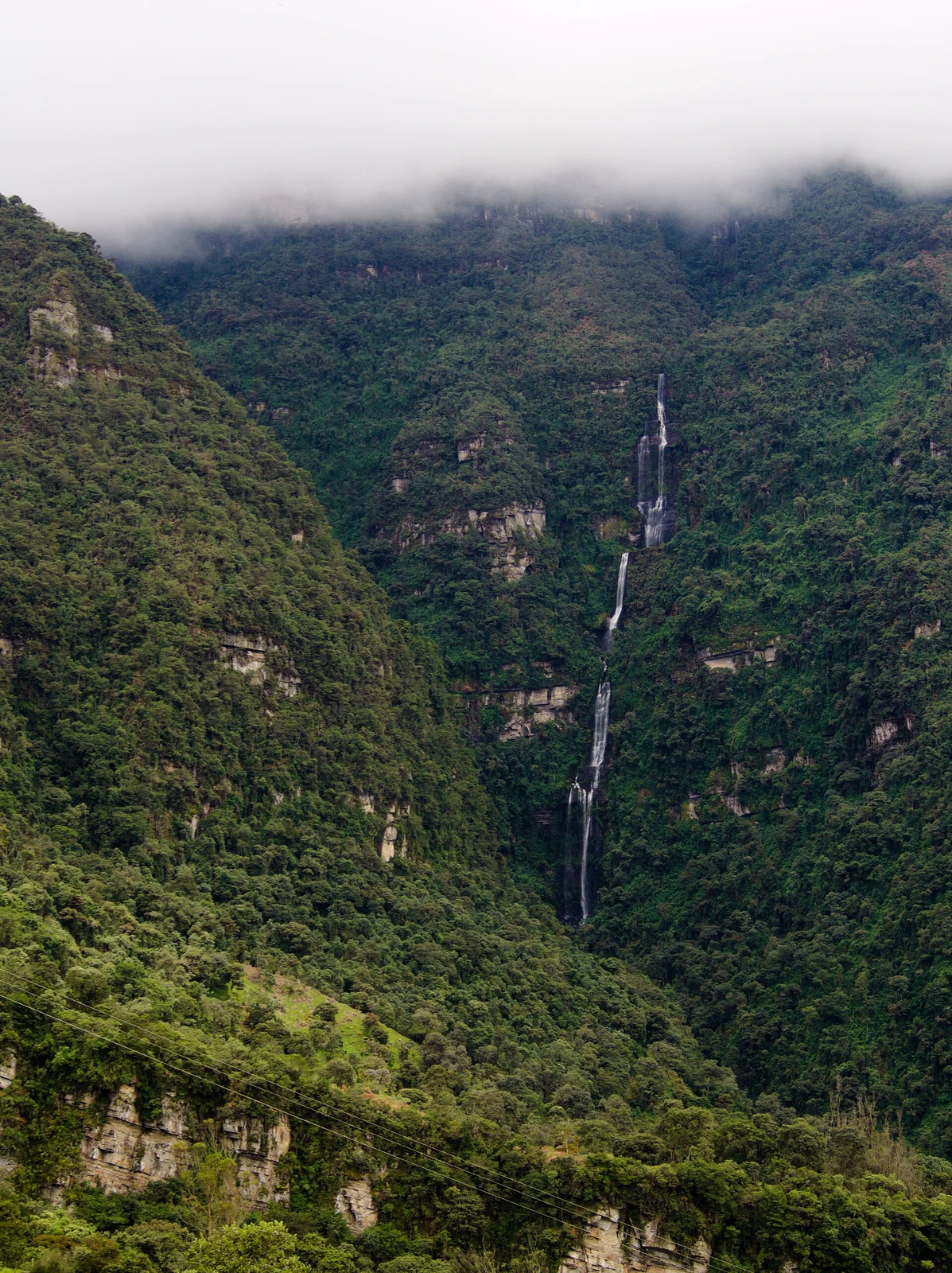
Use the managed entrance and current local trail guidance. Rain turns the path muddy, while mist can obscure the full drop. Stay behind barriers and do not treat the base of a tall waterfall as a swimming pool.
The trip works as a full-day escape from Bogotá or a slower overnight stay around Choachí. Walking first to El Chiflón creates a satisfying build-up before La Chorrera appears through the valley. Cloud and wind constantly change the view, so allow time instead of timing one quick photograph.
2. Fin del Mundo
The Fin del Mundo route near Mocoa follows lush forest and a chain of natural pools before the stream plunges from a high rock ledge. The combination of hiking, water and Amazonian foothill vegetation makes it one of Colombia's most complete waterfall days.
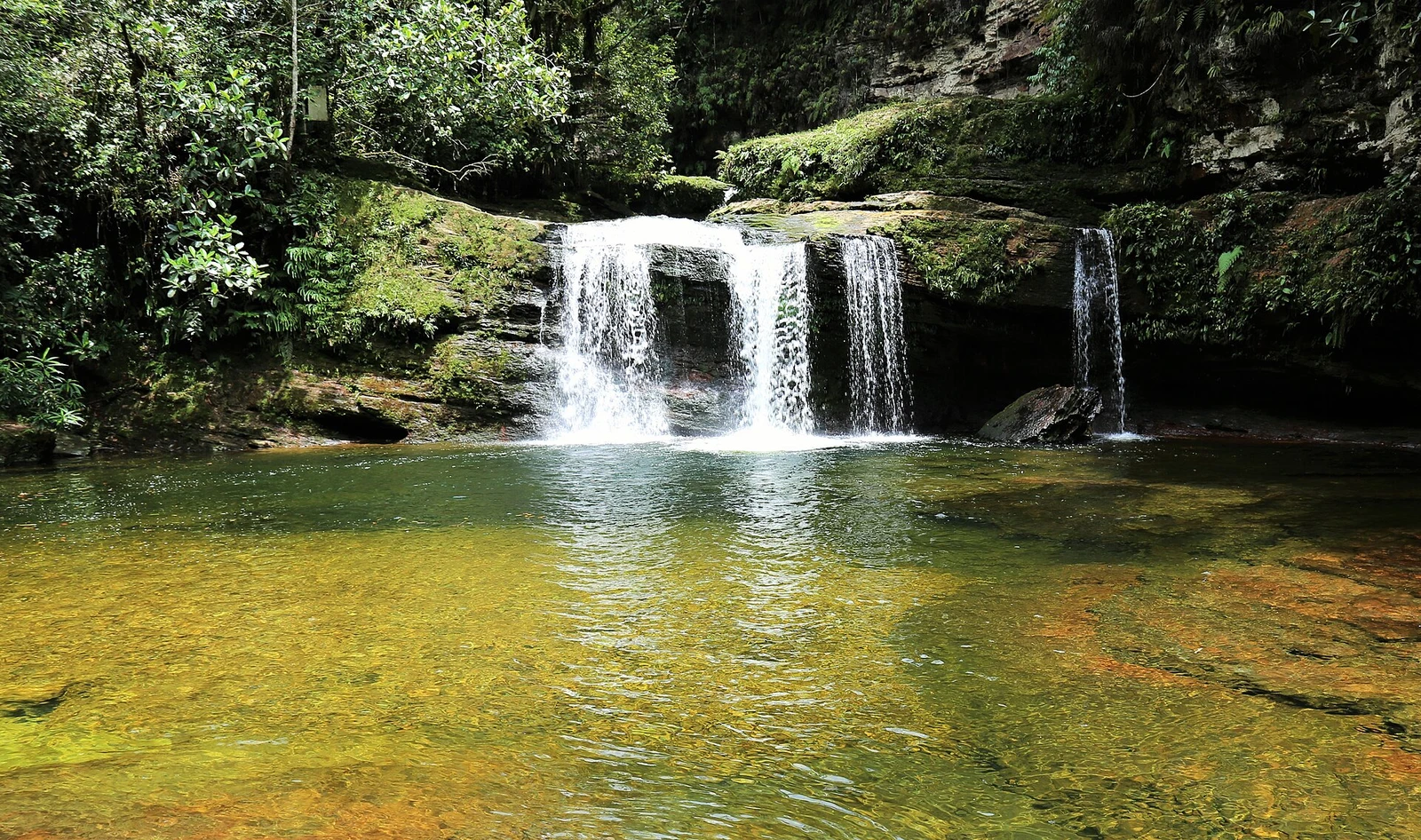
Enter through the authorized community system and follow the assigned guide. Swimming is limited to approved pools and depends on flow. The exposed lip is no place for shortcuts or risky photographs.
Several smaller falls and pools break up the warm walk before the main viewpoint, making the outing more varied than its name suggests. Mocoa is the easiest base. Begin early, carry drinking water and give the guide room to adjust the order when rain changes a crossing.
3. Juan Curí
Near San Gil, Juan Curí is a powerful multi-stage waterfall reached on a forest trail. It is also a center for guided rappelling, which turns the cascade into an active Santander adventure rather than a simple viewpoint.
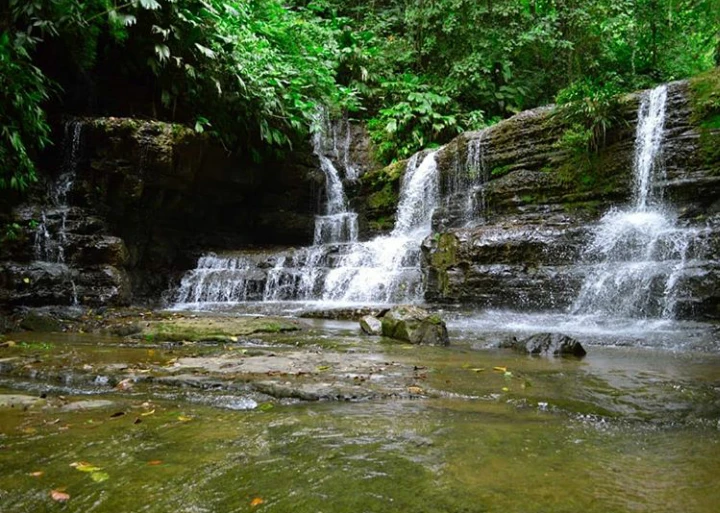
Use the official local access and a properly equipped operator for rappelling. Swim only in the designated lower water when staff judge the flow safe; falling water and submerged rock make the impact zone hazardous.
The forest approach takes the visitor away from Santander's open canyon scenery before the waterfall suddenly fills the gorge. Allow a half day for a normal visit and longer for rope activities. San Gil is the practical base, with transport often bundled by adventure operators.
4. Salto del Mortiño
The Salto del Mortiño drops into a deep gorge in Huila, near the route between San Agustín and Isnos. Viewpoints reveal the scale of the canyon, and locally managed adventure activities may include swings or zip lines above the landscape.
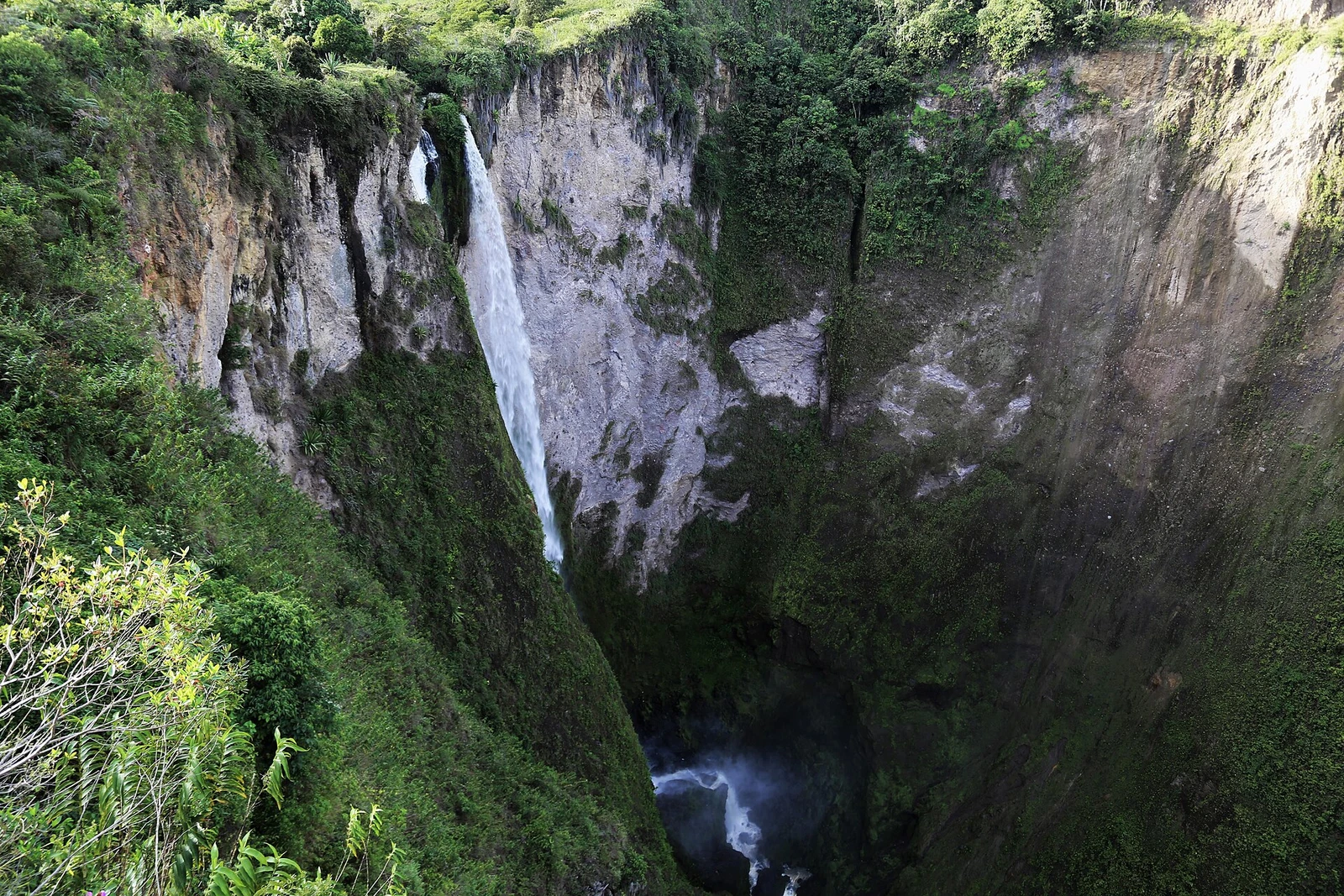
Treat this as a canyon-viewing destination rather than a swim. Verify that platforms and activities are currently operating, use fitted safety equipment and keep back from unprotected edges.
Mortiño fits naturally into a route between San Agustín's archaeological sites and the landscapes around Isnos. Morning light and lower visitor numbers can improve the viewpoint experience. If you add a swing or zip line, inspect how the operator fits and checks each participant rather than choosing by height alone.
5. Salto de Bordones
Also in Huila, Bordones descends through a green mountain cleft in a remote rural setting. Its height and layered fall are best appreciated from established viewpoints and local paths rather than by forcing a route to the base.
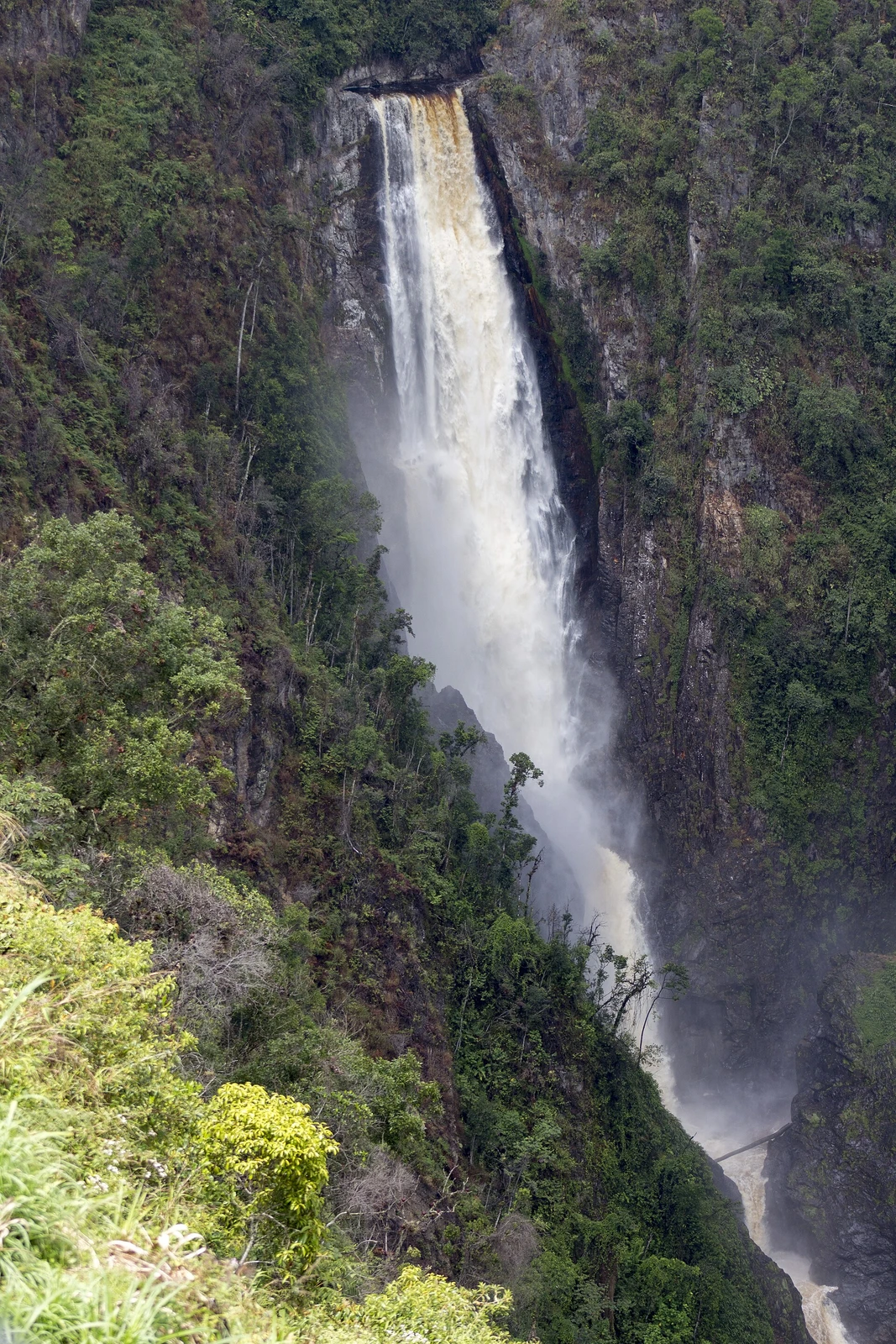
Road and trail conditions deteriorate after rain. Arrange local guidance, allow extra travel time and do not follow unverified shortcuts on steep slopes.
The waterfall is often seen from across the gorge, where its multiple stages are easier to understand than at close range. Pair it with Mortiño only if road conditions and daylight allow; rural Huila rewards a deliberate pace, not a race through a checklist.
6. Cascadas de San Carlos
The hills around San Carlos in Antioquia hold numerous cascades and clear pools, including La Chorrera, El Chispero and other locally known sites. The appeal is variety: a visitor can combine hiking, canyoning and a carefully chosen swim.
Go with a local guide who knows land access and the day's river levels. Different waterfalls have different risks, and canyoning requires technical equipment and trained supervision.
San Carlos works best as a two- or three-night base because no single cascade defines the area. A guide can match La Chorrera, El Chispero or another local route to recent rain and your appetite for swimming. The town's community-led tourism is part of the region's renewal and worth supporting directly.
7. Cascada La Escalera
Near Jardín, La Escalera pours down a green mountainside in the coffee-growing Andes. It works best as part of a rural walk or locally guided circuit that may also explore smaller falls and cloud-forest habitat.
Confirm whether the approach crosses private land and pay local access fees where requested. Trails are slick after rain, and the safest experience may be viewing rather than entering the water.
Jardín provides a comfortable base and makes it easy to combine the waterfall with coffee landscapes, birding and village life. Walking or riding part of the rural approach slows the transition from town into the green valley. Ask locally before setting out because path and property arrangements change.
8. Cascadas and thermal pools near Nuquí
Along the Chocó coast, forest streams descend toward the Pacific around communities such as Termales and Jurubirá. Guided walks can combine cascades, rainforest and community-managed warm pools in one of Colombia's wettest regions.
Arrange the visit locally and accept boat or trail changes caused by weather. Do not use soap in natural water, and never enter a coastal river during a sudden rise.
Stay in one community long enough to experience the landscape beyond a quick excursion. Around Termales, forest walks can lead from the beach toward warm pools and cool cascades in the same day. Local hosts know which streams respond fastest to rain and when a boat return is unwise.
9. Cascada del Amor and Las Delicias near Leticia
Seasonal forest cascades outside Leticia offer a compact introduction to the Amazon landscape. Their character changes dramatically with rainfall: a vigorous waterfall in one period may become a gentle stream in another.
Use local transport and a guide who can confirm current access. Trails can flood or become extremely slippery, and natural pools require the same caution as larger rivers.
These are modest, intimate cascades rather than towering spectacles, best valued as part of a forest day outside Leticia. Seasonal change is the point: high water reshapes paths and low water reveals different details. Combine the walk with plant interpretation instead of measuring the outing only by water volume.
10. Salto del Tequendama
The Bogotá River plunges dramatically into a gorge at Tequendama, a landscape intertwined with Muisca tradition and Colombia's industrial history. Its scale and the nearby historic hotel-museum make it an important visit even though it is not a wilderness swim.
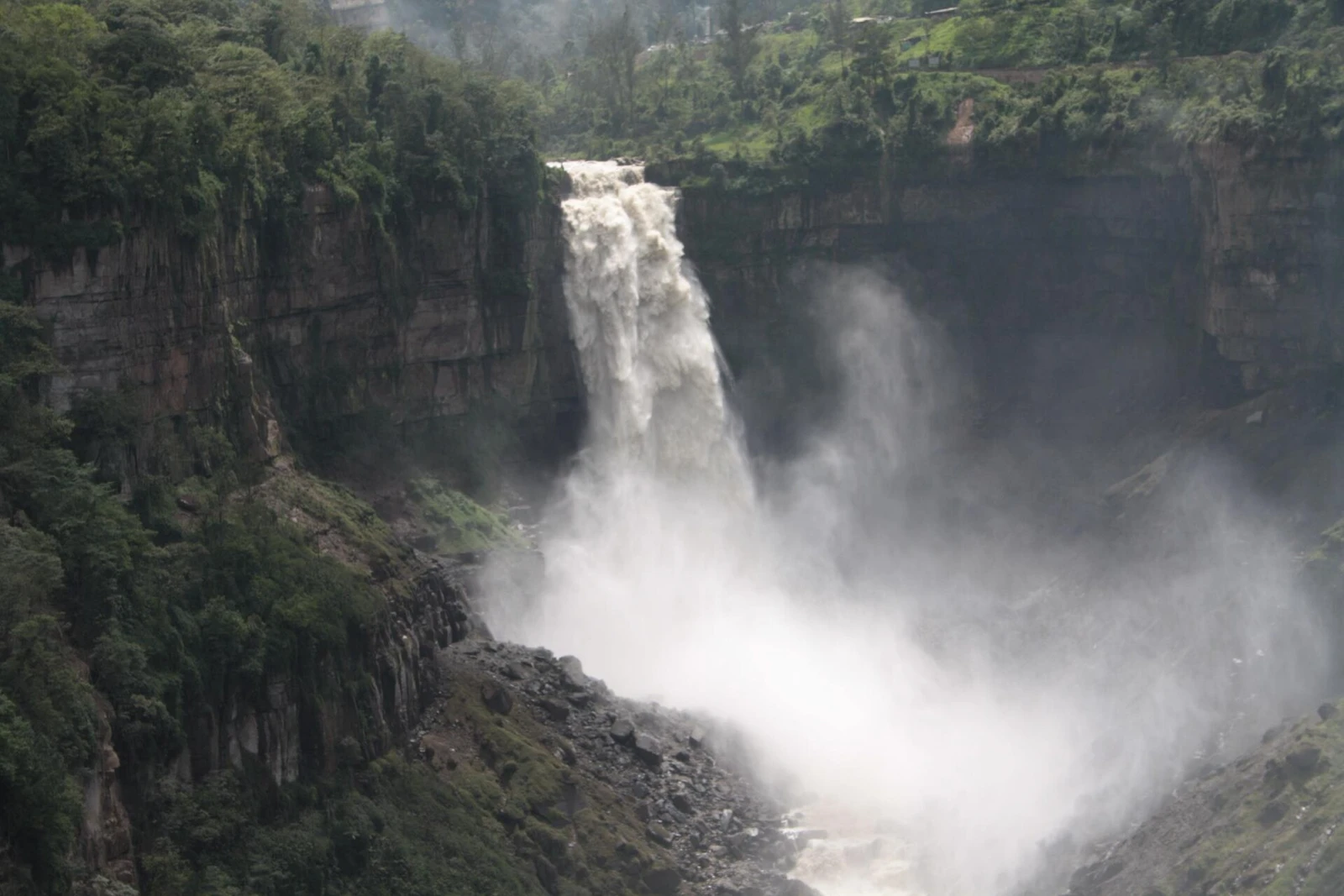
View the fall only from established public areas. Water quality and the gorge make swimming entirely inappropriate, while fog and traffic demand care along the road.
The restored Casa Museo Salto del Tequendama adds architecture, ecology and the Bogotá River's difficult environmental history to the view. That context turns a roadside stop into a more thoughtful half-day excursion. Confirm museum opening before leaving Bogotá and avoid walking along blind road bends.
Which Colombia waterfall should you choose?
Choose Fin del Mundo for a full jungle-and-water day, La Chorrera for the easiest major waterfall trip from Bogotá and Juan Curí for guided rappelling near San Gil. Bordones and Mortiño fit a Huila road trip, while the falls near Nuquí are best folded into a longer community-based Pacific stay.
For more active routes, see Colombia's best hikes and best adventure activities.
How rainfall changes the experience
A waterfall at peak flow may look spectacular while being unsuitable for swimming or canyon access. Conversely, a safer low-flow visit can make a very tall cascade appear faint. Recent rain across the whole watershed matters more than blue sky at the entrance, especially around Mocoa, Chocó and Antioquia.
Ask the local manager which parts of the route are open that morning and be willing to enjoy a viewpoint instead of a pool. Water clarity is not proof of safety: cold water, hidden rock, undertow and debris remain possible even when the surface looks calm.
Before you go
- Ask about rain upstream, not only the weather above your current location.
- Swim only where the land manager or guide explicitly approves it.
- Avoid cliff jumps; pool depth and submerged debris change with every flood.
- Wear shoes with grip and protect electronics in a dry bag.
- Confirm private-land fees, guide requirements and road access before setting out.