

Albania's water landscapes are shaped by limestone mountains, snow-fed rivers and a coast reached through steep gorges. The most memorable experiences involve more than looking at a cascade: rafting between Osum's walls, walking from Theth to a cold mountain pool, soaking beside an Ottoman bridge at Bënjë or following a forest path to a waterfall in the south. These places also change dramatically with the season. Spring water can turn a gentle river into a powerful current; late summer can reduce a famous fall to a thin veil.
Access is not standardized. Some sites have platforms and ticketed entry, while others involve rough roads, slippery tracks or locally guided canyon travel. Never infer that swimming, jumping or entering a gorge is safe because photographs show someone doing it. Rain upstream, cold shock, submerged debris and rockfall are the recurring hazards. Use the list below to choose the kind of experience you want, then confirm same-day conditions on the ground.
Albania's water landscapes at a glance
| Place | Landscape | Main experience | Best planning note |
|---|---|---|---|
| Osum Canyon | Deep river gorge | Rafting or rim viewpoints | Water level controls activity |
| Bënjë and Langarica | Thermal pools and canyon | Soak and short gorge walk | Avoid after rain |
| Blue Eye of Theth | Mountain pool | Full-day valley hike | Water is extremely cold |
| Grunas Waterfall | Alpine cascade | Short hike from Theth | Strongest near snowmelt |
| Syri i Kaltër | Karst spring | Boardwalk and viewpoint | Swimming restrictions apply |
| Bogovë Waterfall | Forest cascade | Short hike and pool | Cold water, slippery rock |
The 10 best waterfalls, canyons and springs in Albania
1. Raft or hike above Osum Canyon
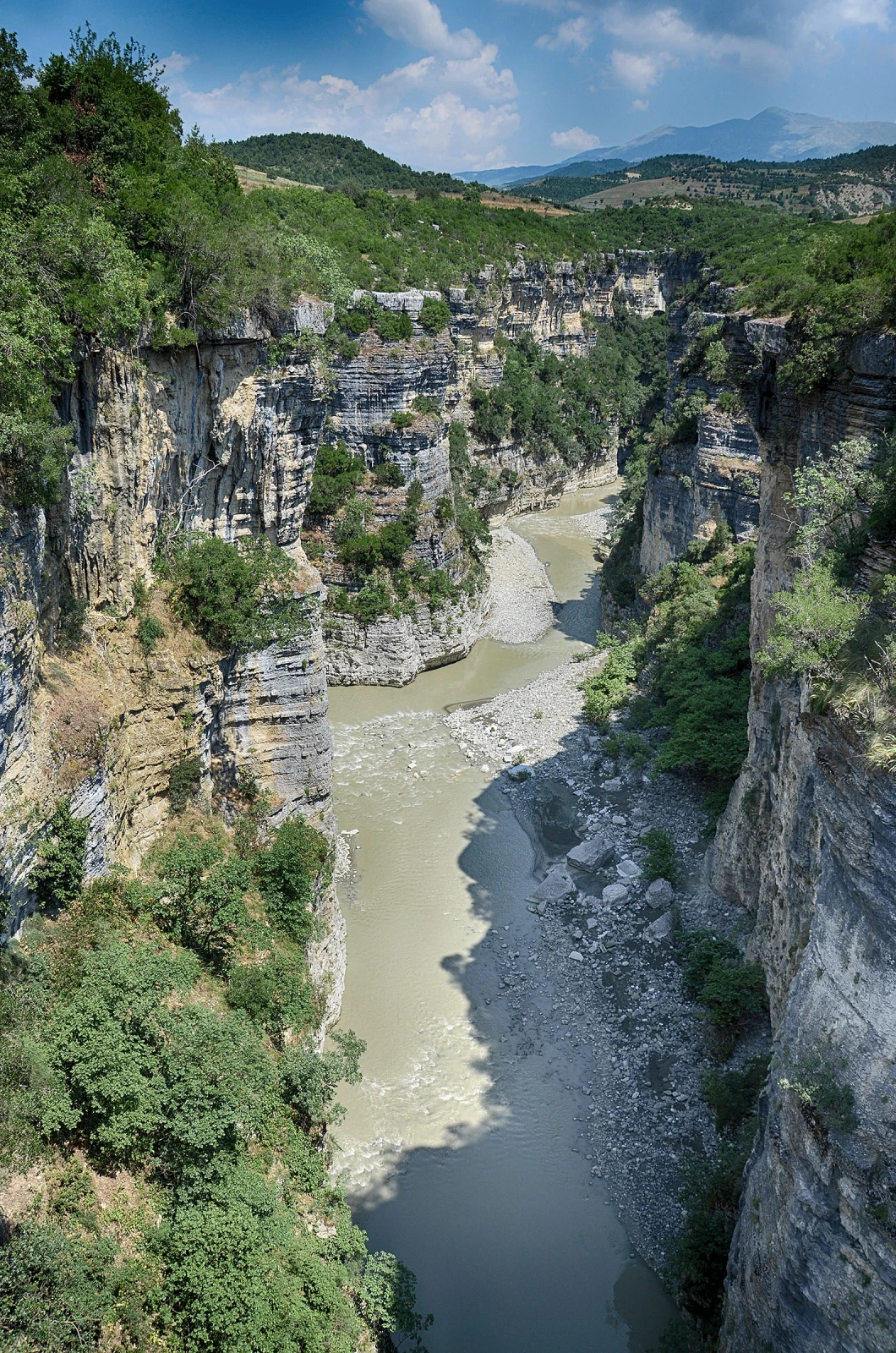
Osum Canyon near Çorovodë is Albania's defining river gorge, with vertical limestone walls, seasonal waterfalls and narrow passages carved by the Osum. In higher spring flows, licensed operators run rafting trips through sections of the canyon. When water is lower, guided canyon walks or rim viewpoints may replace rafting; the experience should follow the river, not a fixed marketing calendar.
Book with an operator that supplies helmets and flotation, explains its rescue plan and cancels when conditions are wrong. Do not enter independently after rain or jump from ledges. Travelers who prefer dry ground can drive between signed overlooks, but should remain behind barriers and watch for traffic on narrow roads. Berat is the common base, though staying in Çorovodë makes an early start easier.
2. Soak at Bënjë and enter Langarica Canyon carefully
Warm mineral water gathers in stone-edged pools beside the Ottoman-era Kadiut Bridge near Përmet. Immediately beyond, the Langarica River cuts into a narrow canyon that visitors can explore on foot when levels are low. The combination of bridge, thermal water and sculpted rock makes this one of Albania's richest half-day outings.
The pools are naturally warm rather than spa-hot, and their informal edges become slippery. Water can rise quickly in the canyon after distant rain, leaving no escape from narrow sections. Check the forecast for the entire catchment, use water shoes and turn around at the first sign of stronger flow or worsening weather. Avoid soaps and leave the pools cleaner than you found them.
3. Hike to the Blue Eye of Theth
The Blue Eye at Nderlysaj is a circular, intensely colored pool fed by cold mountain water. Reaching it from Theth turns a swimming-hole photograph into a substantial valley journey of roughly 17–20 kilometres return; arranging transport to Nderlysaj reduces the walk to its final, steeper section.
The water is cold enough to cause immediate loss of breath and swimming control. Enter only if conditions and your ability allow, remain close to an exit and never leap from surrounding rock. The path also deserves attention: heat, loose surfaces and the return climb make water and sturdy footwear essential. Do not confuse this site with the larger karst spring of the same nickname near Sarandë.
4. Walk to Grunas Waterfall
Grunas Waterfall drops about 25 metres from a limestone source near Theth and can be reached on a relatively short village walk. The route crosses a lived-in alpine landscape before entering rougher ground near the cascade; adding a safe canyon viewpoint makes it a rewarding half-day.
Snowmelt and recent weather control the volume. Wet rock is polished, and the pool beneath a falling column is not automatically a safe swimming area. Keep out of the impact zone, avoid scrambling for a closer photograph and return before darkness complicates farm tracks. The official tourism site identifies Grunas as a protected natural monument, so treat paths and vegetation accordingly.
5. See the Syri i Kaltër spring
Syri i Kaltër—the Blue Eye near Muzinë—is a powerful karst spring whose deep blue center feeds the Bistricë River. A managed approach and viewing platforms make it one of the easiest natural sites in southern Albania, but its color, depth and surrounding woodland still justify a focused visit rather than a hurried photograph.
Swimming and jumping around the protected spring have been restricted, and barriers must be obeyed regardless of what older travel accounts describe. Visit early for quieter paths, carry water for the exposed approach and continue to nearby villages or Gjirokastër instead of crowding the spring at midday. The mountain Blue Eye near Theth is a completely different destination.
6. Hike to Bogovë Waterfall
Bogovë Waterfall lies in a wooded gorge between Berat and Çorovodë. A short trail follows clear water toward a compact cascade and cold pool, offering a refreshing contrast to the exposed Osum viewpoints. It pairs naturally with a canyon day, though rushing both can mean arriving at the waterfall when it is busiest.
The final rocks are wet and uneven. Wear footwear with grip, protect valuables from water and do not dive into a pool whose depth and debris change. After heavy rain, clarity and access deteriorate; in prolonged dry weather, flow may be lower. Park without blocking village access and support local food or guide services where available.
7. Explore the Koman and Shala river landscape
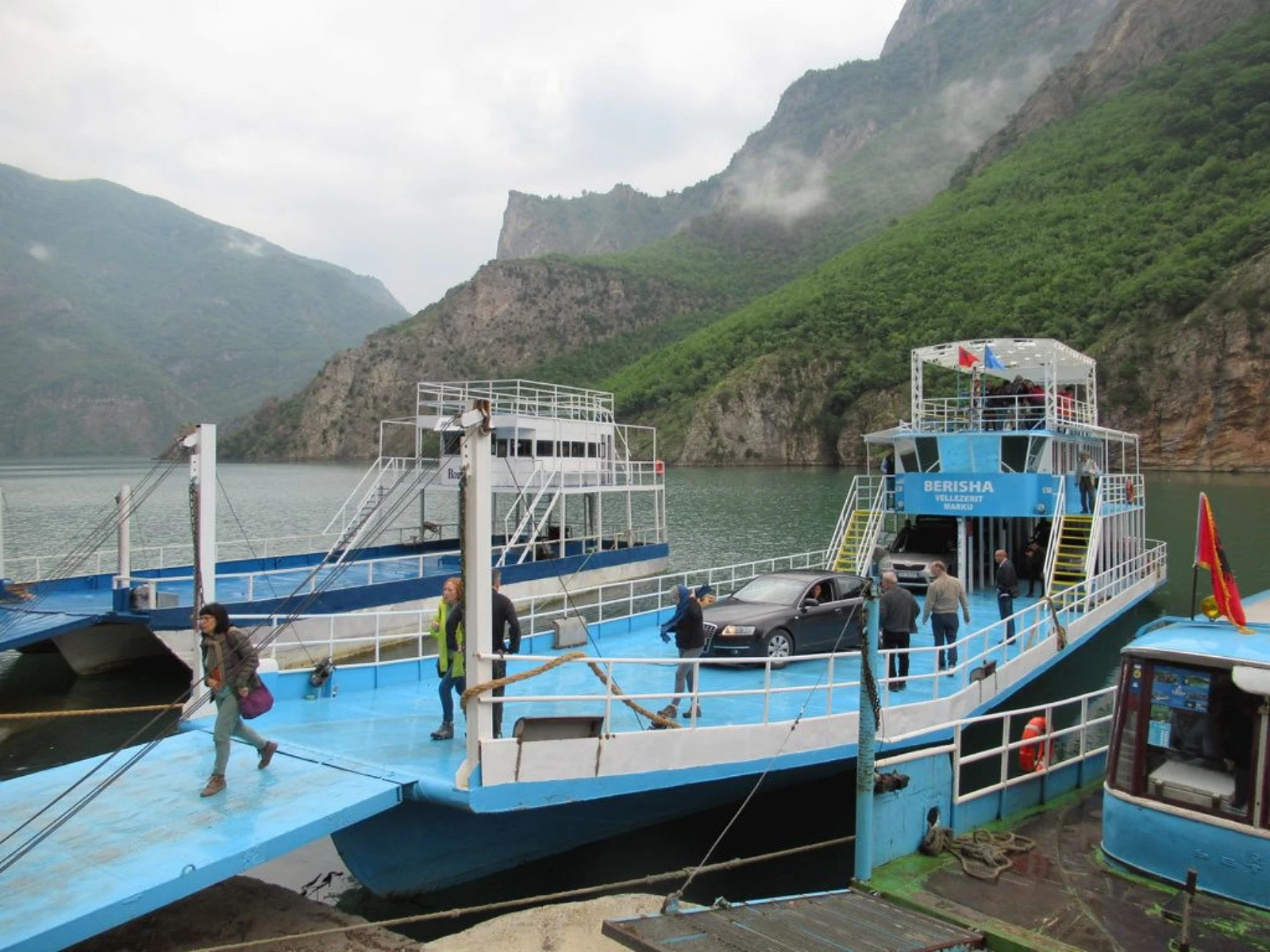
The ferry across Lake Koman passes through narrow, mountain-walled reaches that resemble a river canyon, while side journeys toward the Shala River lead to clear water and gravel beaches. The real experience is the passage through northern Albania's terrain, not the crowded “Thailand of Albania” image often used to market one stop.
Choose between the public vehicle ferry, a passenger service and a separate Shala excursion; they are not interchangeable. Verify departure points, return time and life-jacket provision, and avoid itineraries that leave too little margin for onward transport to Valbona. Water remains cold and boat traffic is constant, so swim only in designated calm areas away from propellers.
8. Walk through Holtë Canyon
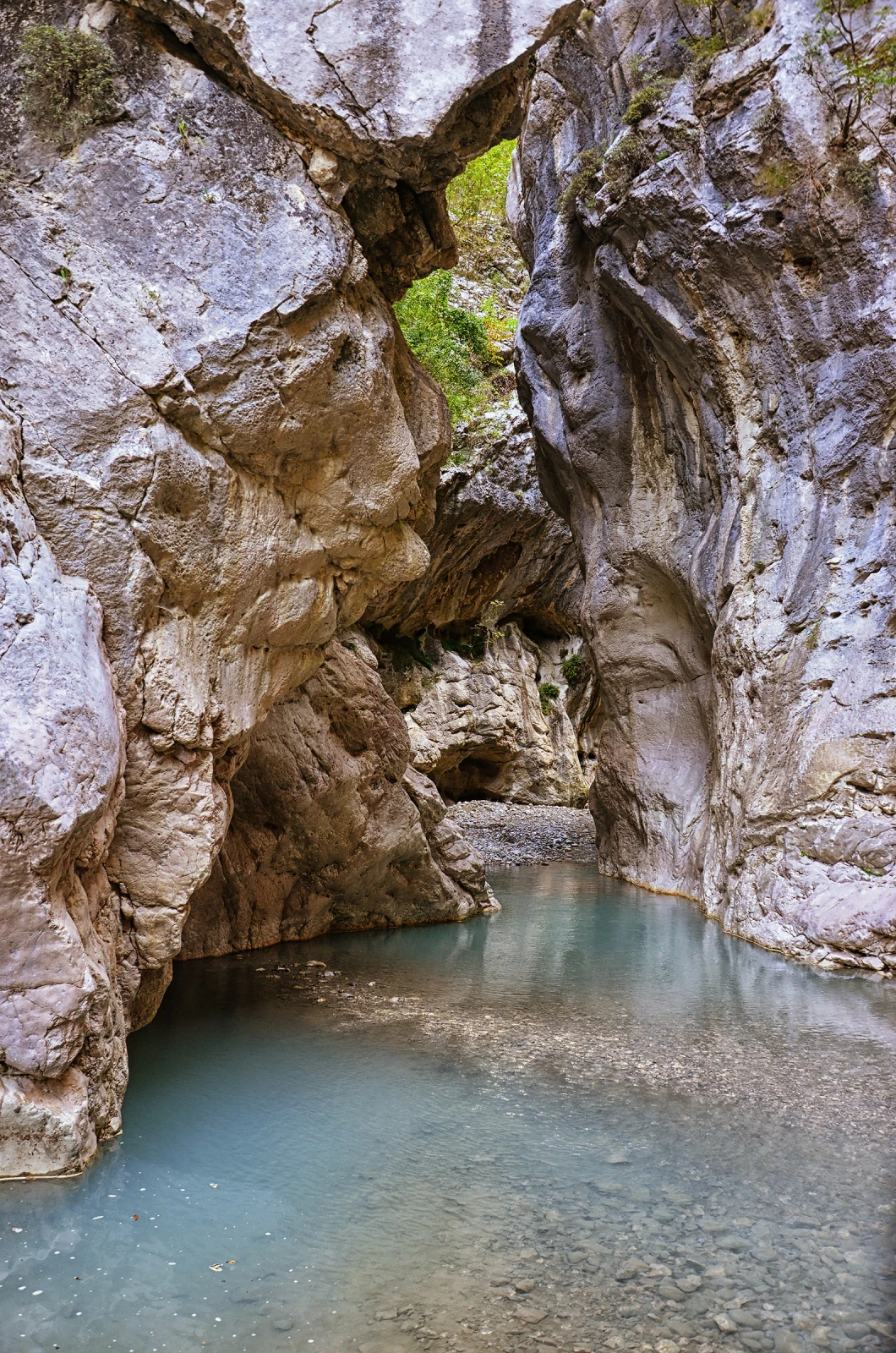
Holtë Canyon near Gramsh narrows around a shallow river with sculpted walls, small pools and sections that may be walked in suitable summer conditions. It offers a more intimate canyon experience than viewing Osum from above, but also requires more judgment because the route follows water and escape points vary.
Go with a local guide after checking upstream weather. Wear a helmet and water footwear if the chosen activity calls for them, keep electronics protected and do not enter during or after heavy rain. Turning around is the correct response when water becomes deeper, faster or cloudy. Combine the canyon with Gramsh rather than treating the rural roads as a quick detour.
9. Visit Sotira Waterfall
Sotira descends from the eastern face of Mount Tomorr in multiple ribbons, surrounded by forest and pasture near the village of Sotirë. Reaching it involves a rural drive and a walk whose exact length depends on road conditions and where a vehicle stops. The journey gives the waterfall a stronger sense of discovery than more developed sites.
Spring usually brings the fullest flow, while summer heat can make the open approach tiring. Ask locally about the current track, take an offline map and carry food and water. The cliff base is vulnerable to falling rock; admire the cascade from a safe distance and avoid standing directly beneath it. A guide is valuable if combining the falls with longer Tomorr routes.
10. Follow the Peshtura Waterfall trail
Peshtura Waterfall near Progonat drops into the Kurvelesh highlands in southern Albania. The rural setting, layered rock and approach through a less-visited region make it appealing to travelers already exploring Tepelenë, Nivicë or the upper Vjosa landscape. Flow is highly seasonal, so spring is generally more rewarding than the driest months.
Road and trail information can be sparse. Confirm the approach in the nearest village, avoid relying on a single online pin and hire a local guide if route-finding is uncertain. There are exposed edges and no reliable rescue presence. The objective is a careful landscape walk, not reaching the nearest possible perch above the fall.
Which natural wonder should you choose?
Choose Osum for an organized river adventure, Bënjë and Langarica for a gentler day mixing warm water with a canyon, Theth for alpine hiking, and Syri i Kaltër for an accessible spring viewpoint. Bogovë works well with Berat, while Sotira, Peshtura and Holtë reward travelers prepared for rural roads and local guidance.
For longer routes, see Albania's best hikes. For sea access and coastal coves, compare the best beaches in Albania.
Before you go
- Check upstream weather, not only the forecast at the canyon entrance.
- Never enter a gorge when rain, rising water or thunderstorms are possible.
- Treat cold water as a hazard; enter gradually and stay near a safe exit.
- Use helmets and flotation for commercial rafting or canyon activities.
- Do not use soap in natural thermal pools, and carry every piece of waste out.