

Albania's best beaches are striking because the landscape rarely stops at the waterline. Limestone mountains fall toward the Ionian Sea, villages sit above olive-covered slopes and footpaths or boat rides still separate several coves from the coast road. The north offers broad Adriatic sand and lagoons; the Riviera in the south is defined more often by pebbles, transparent water and steep headlands.
That beauty does not make every beach effortless. July and August bring heat, traffic, amplified music and tightly packed sunbeds to famous bays. Access roads can be rough, parking informal and shade scarce. The most rewarding plan is often to stay several nights in one coastal town, start early and combine one organized beach with one cove reached on foot. The entries below favor places where the journey, setting or surrounding village gives the day more substance than simply renting a lounger.
Albania beaches at a glance
| Beach | Coast | Character | Access |
|---|---|---|---|
| Gjipe | Ionian Riviera | Canyon-backed cove | Hike, rough road or boat |
| Dhërmi | Ionian Riviera | Long pebble shore | Paved road |
| Ksamil | Far south | Small turquoise bays | Easy, very busy |
| Grama Bay | Karaburun | Remote cliff amphitheater | Boat or demanding hike |
| Borsh | Ionian Riviera | Long, spacious beach | Easy |
| Rana e Hedhun | Adriatic north | Dune beneath a mountain | Road plus short walk |
The 10 best beaches in Albania
1. Hike into Gjipe Beach
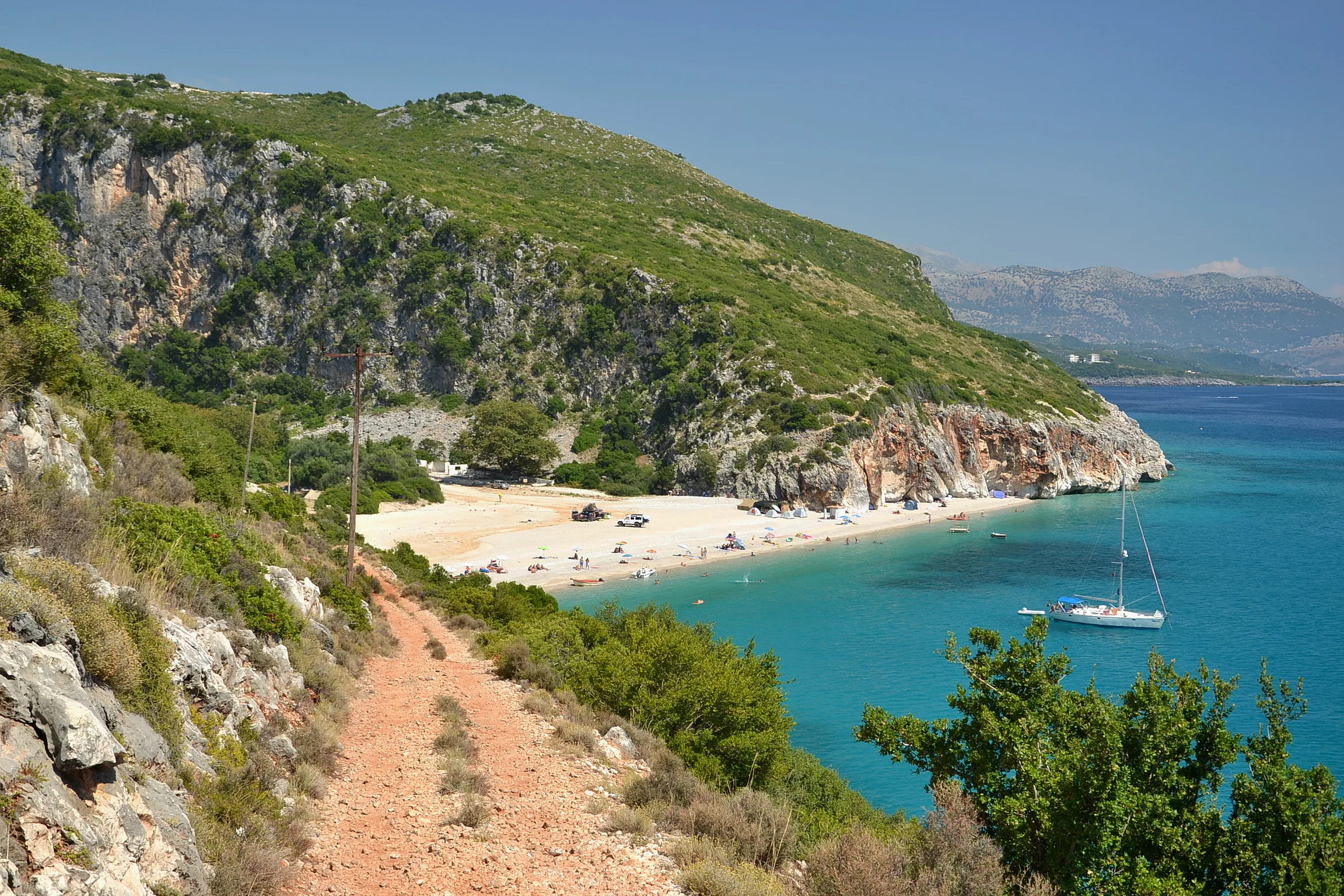
Gjipe sits where a narrow canyon opens into a bright pebble cove between Dhërmi and Himarë. Arriving on foot gives the beach its real sense of discovery: from the usual parking area, a rough track descends for roughly 30–45 minutes, with open sea views but little shade. Boats also arrive from neighboring towns, and high-clearance vehicles sometimes continue farther than ordinary cars should.
In summer the cove has seasonal food, camping and sunbeds, so it is no longer secret. Come early or stay late enough to experience quieter water. Bring drinking water, closed shoes for the approach and cash. Do not walk deep into the canyon after rain, when flash flooding and falling rock can turn a scenic gorge into a trap.
2. Swim at Dhërmi Beach
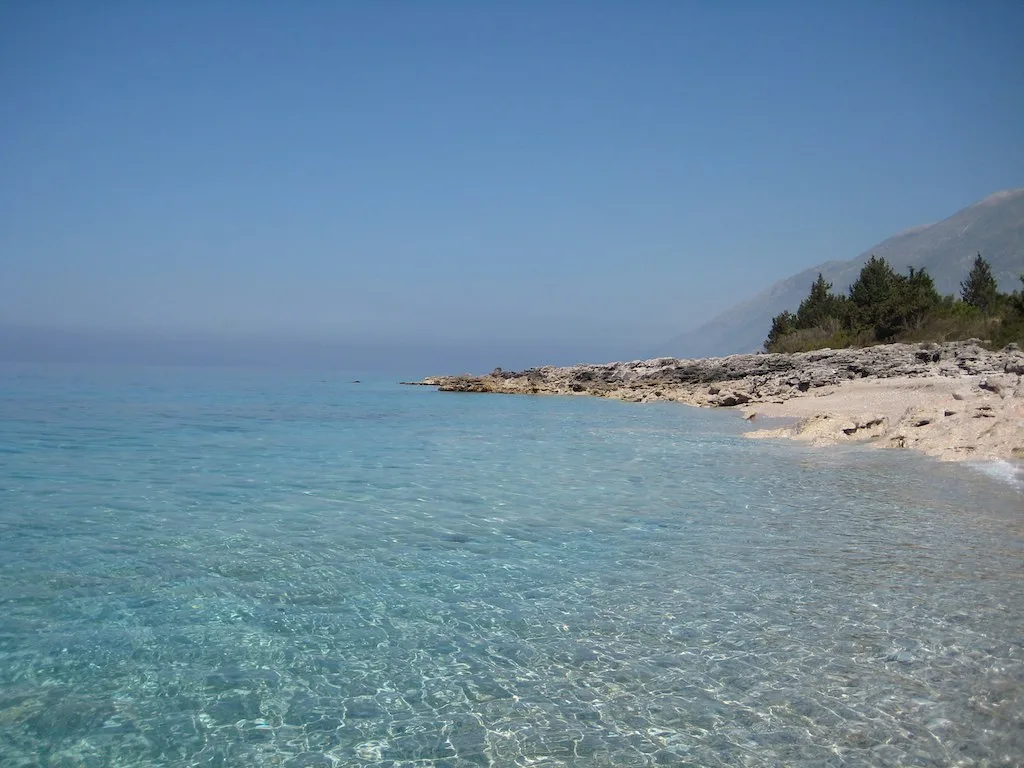
Dhërmi combines one of the Riviera's longest developed waterfronts with a historic white-stone village high above it. The pale pebble shore and clear water are easy to reach, and a growing choice of hotels, restaurants and beach clubs makes it a practical base for travelers who want comfort without giving up mountain scenery.
The central sections are lively and expensive in peak season. Walk along the shore to find a mood that suits you, or use Dhërmi as the departure point for a boat to smaller coves. Set aside time to climb or drive to old Dhërmi rather than experiencing only the resort strip; its churches, steep lanes and sunset view explain why this coastline is more than a collection of swimming spots.
3. Explore the small bays of Ksamil
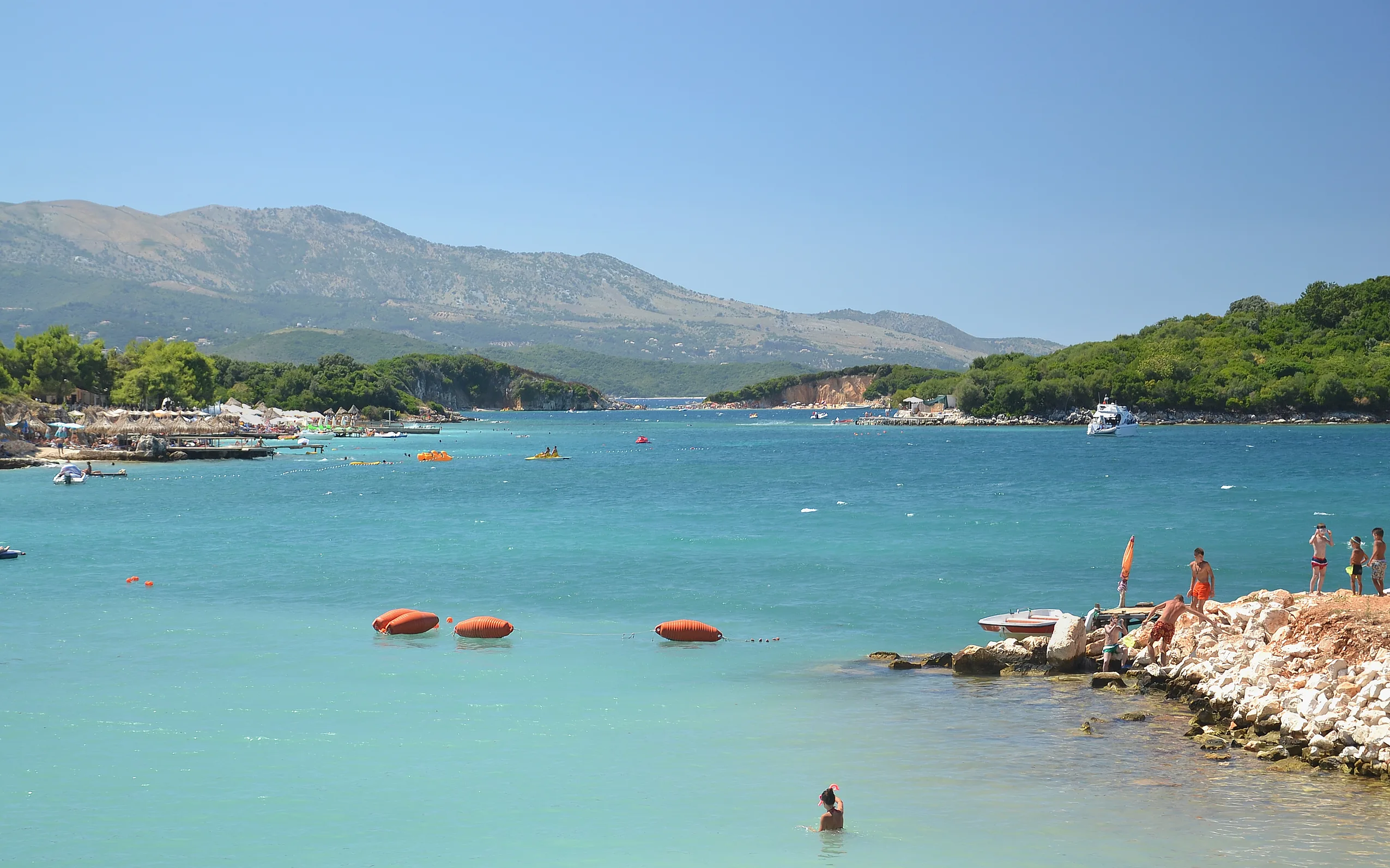
Ksamil's pale sand, shallow turquoise water and small offshore islands create Albania's most instantly recognizable beach scene. Kayaks and small boats make the nearest islets part of the outing, while Butrint's archaeological landscape lies only a short journey south. For families or travelers without a car, access and services are unusually straightforward.
Popularity is the cost. In July and August, much of the shore is managed by restaurants or beach clubs, roads clog and finding an unoccupied patch can be difficult. Visit in the shoulder season or arrive early, confirm the price before taking a sunbed and never attempt to swim across a channel used by boats. Pair the beach with a slow visit to Butrint for a fuller day.
4. Take a boat to Grama Bay
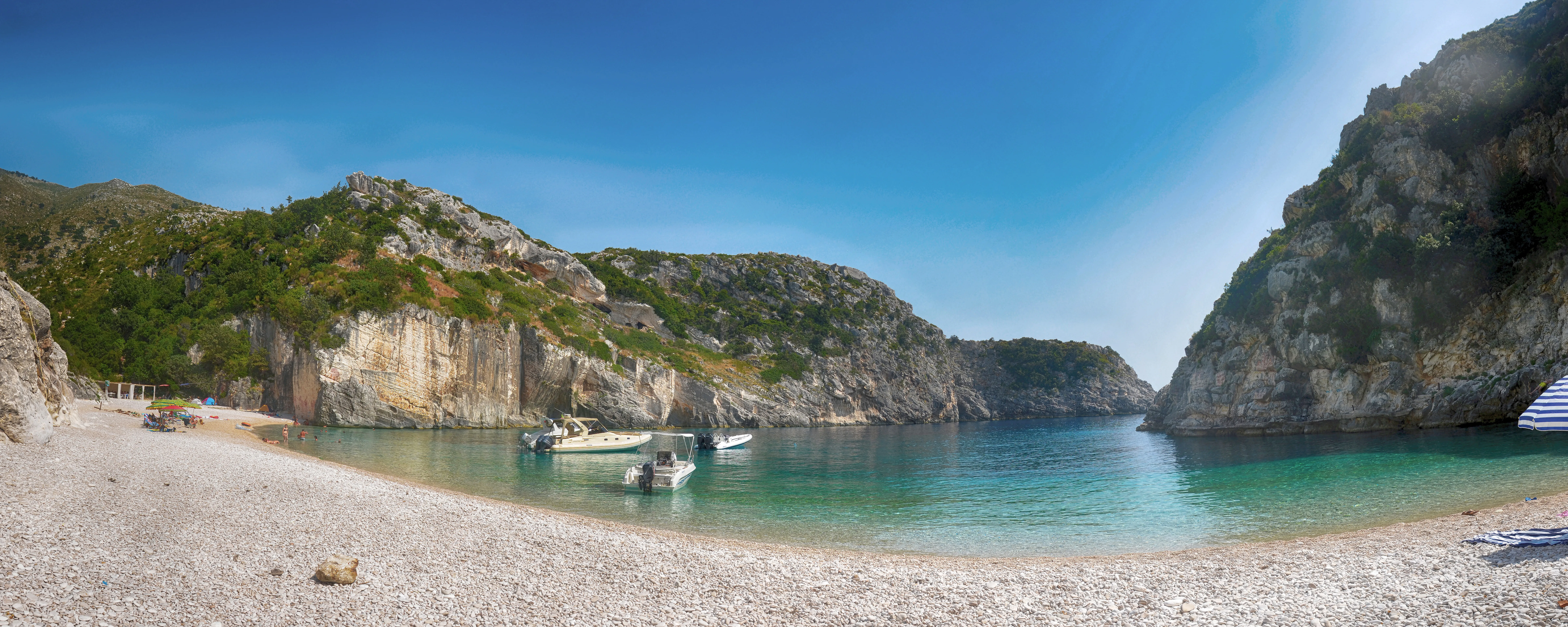
Grama Bay cuts into the wild western side of the Karaburun Peninsula beneath tall cliffs. Sailors have carved names and messages into its rock over centuries, giving a remote swim an unusual human history. Most visitors arrive by authorized excursion boat from Vlorë or the Riviera because the overland approach is long, exposed and navigationally serious.
Ask an operator how long the boat actually stays in the bay, how many passengers it carries and whether sea conditions can alter the route. Bring sun protection and water even when refreshments are advertised. Independent hikers need an experienced guide, a very early start and a conservative plan; this is not a casual path to attempt from an online pin.
5. Walk the shore at Borsh
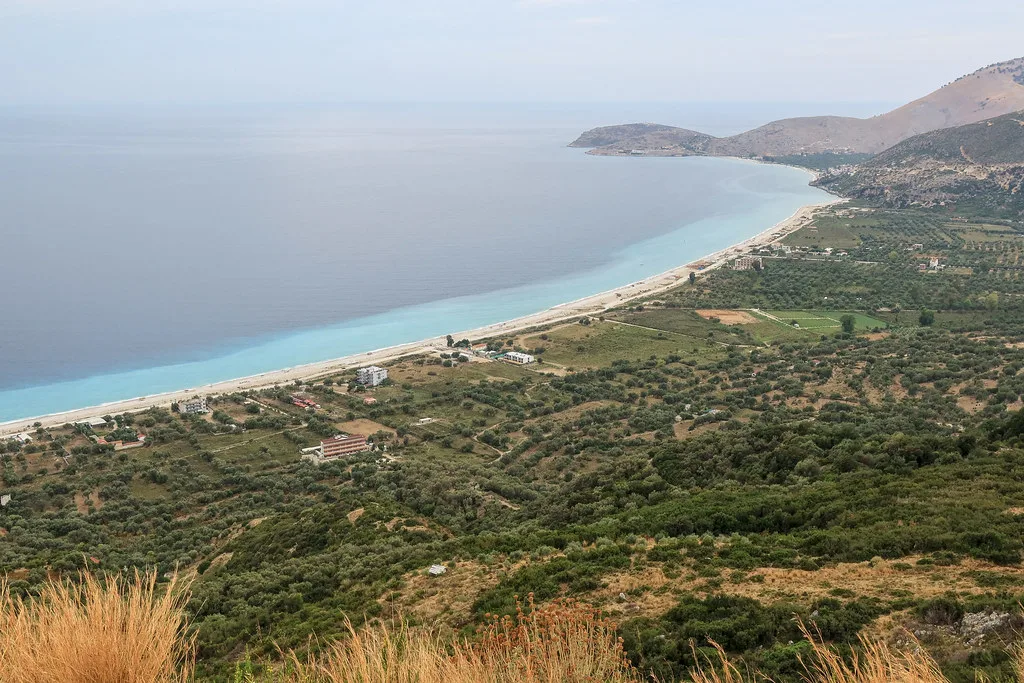
Borsh stretches for several kilometres beneath olive-covered hills, so it absorbs summer visitors better than Albania's smallest coves. Pebbles keep the water clear, while guesthouses, campsites and low-key restaurants are distributed along the shore. It is the best choice for travelers who want Riviera scenery with room for a long walk and fewer reasons to move the car.
Development varies from one segment to another. Inspect the immediate beach before booking accommodation if quiet matters, and wear water shoes if pebbles are uncomfortable. Above the coast, Borsh Castle occupies a dramatic hilltop; visiting in the cooler morning or evening adds a genuine exploration objective to an otherwise restful beach day.
6. Find the cove at Aquarium Beach
Aquarium Beach, between Livadhi and Jale, is a small rock-and-pebble inlet reached by a coastal track. Its compact scale and clear water are most appealing early in the day, before boats and walkers converge. The journey from Livadhi on foot is part of the pleasure, passing dry coastal vegetation and open views.
There is little margin for crowds or poor preparation. Carry all water and remove every piece of rubbish; do not expect dependable shade, toilets or rescue coverage. Check the walking line locally because construction and private access can change. If the sea is rough, enjoy the path and view without entering from slippery rocks.
7. Base yourself at Himarë and Potam
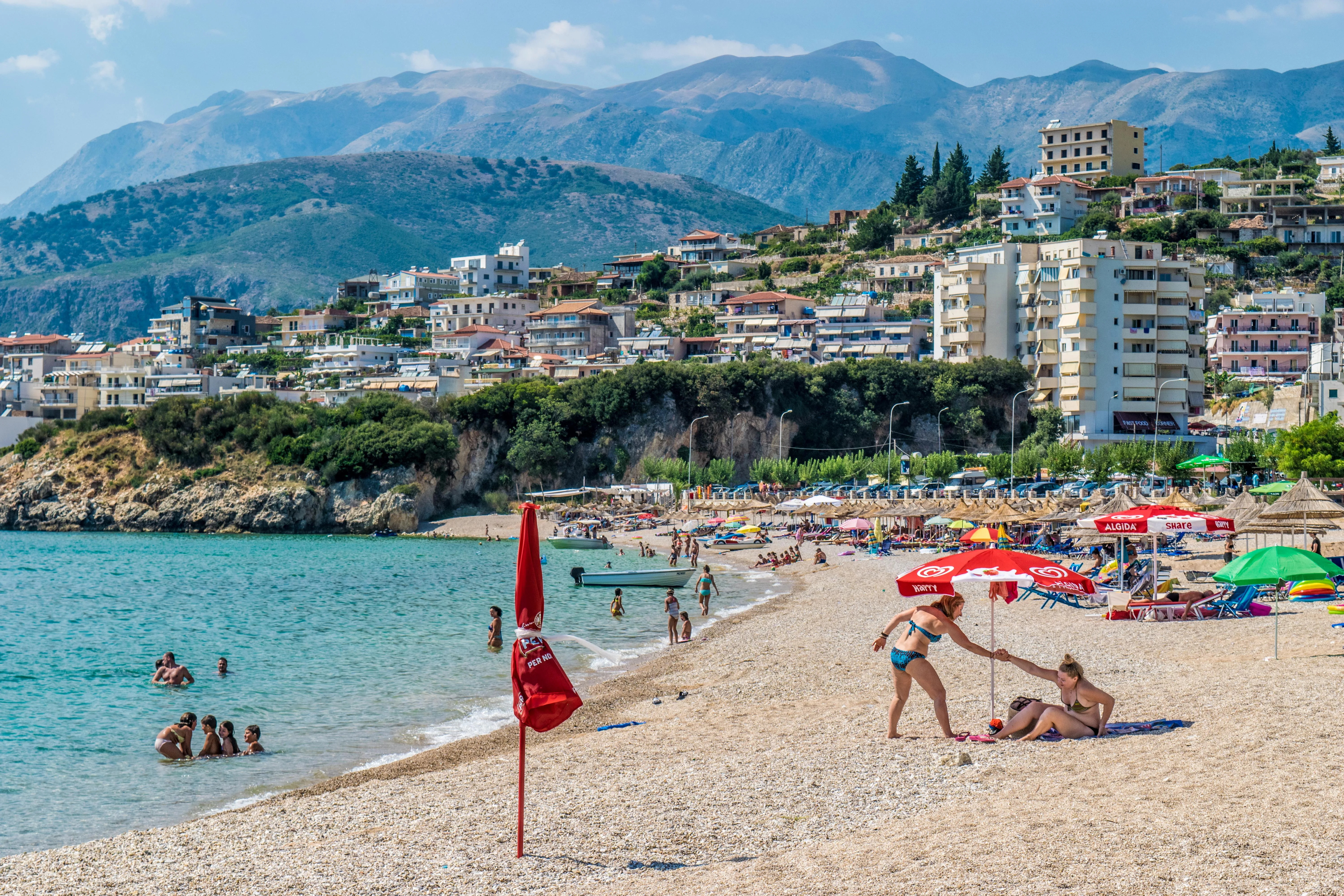
Himarë is the Riviera's most useful beach town for independent exploration. The central town beach is convenient for an evening swim, while Potam and nearby Livadhi provide longer shores within an easy trip. Accommodation, buses, boat excursions and restaurants make it possible to stay without organizing every detail in advance.
Choose Himarë for variety rather than complete solitude. Spend one day walking part of the Southern Coastal Trail, another reaching a cove by boat and a third exploring the old hilltop settlement. Potam's water deepens relatively quickly, and afternoon breeze can create chop, so families should assess the day's conditions instead of relying on a beach label.
8. Cross to Krorez Beach
Krorez is a broad, undeveloped-looking bay south of Kakome, normally reached by excursion boat from Sarandë, Ksamil or Himarë. Green slopes, a pebble shore and the absence of a coastal town make it feel removed from the busiest resorts, even when several boats arrive for lunch.
Boat trips differ greatly: some emphasize swimming, while others spend much of the day moving among multiple stops. Ask about group size, shade, life jackets and the return policy if weather changes. Bring shoes for hot pebbles and do not leave litter simply because a seasonal restaurant is present. Overland access can involve restricted or confusing tracks, so verify locally instead of forcing a route through private land.
9. See the sand slope at Rana e Hedhun
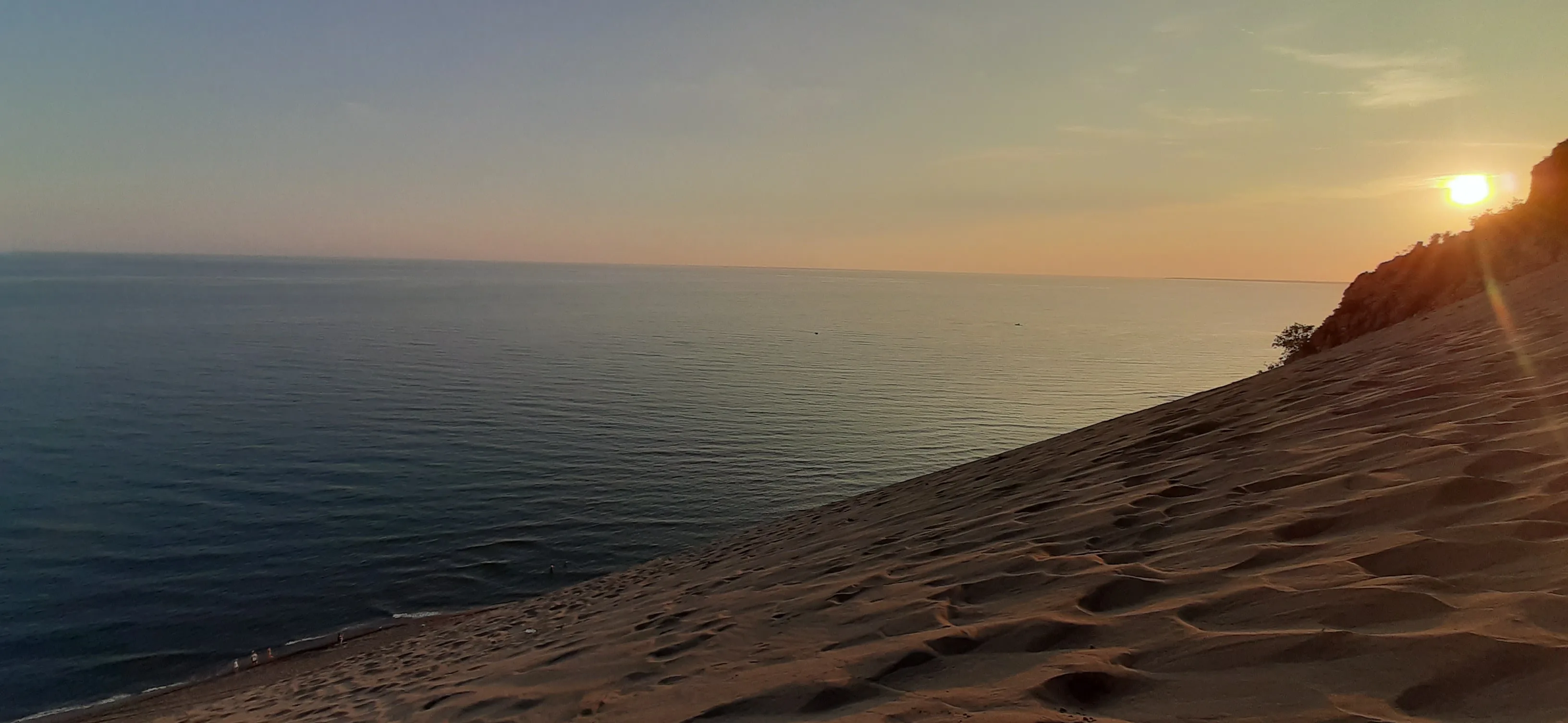
North of Shëngjin, the “Thrown Sand” dune spills down the flank of Mount Rrenc toward the Adriatic. The contrast between mountain, sand and sea makes this beach unlike the white-pebble coves of the Riviera. The water is shallower, the shore broader and the setting well suited to a long walk outside the busiest weeks.
Facilities and road quality change along the coast, so carry what you need and avoid driving onto loose sand. Climbing the dune is tiring and accelerates erosion; enjoy its form without trampling steep fragile sections. Wind can raise waves and redistribute sand quickly, making local conditions more useful than a generic forecast for Shëngjin.
10. Slow down at Lukovë and Bunec
Lukovë's coast offers a quieter southern alternative between Himarë and Sarandë. Bunec is a compact bay divided by a small stream and pier, while other beaches below Lukovë are reached by winding local roads. The area suits travelers willing to trade nightlife and polished services for olive terraces and slower evenings.
Check the final road to your accommodation and beach before arriving after dark. A car is helpful, but drivers should expect narrow bends and occasional rough surfaces. Bring water shoes, choose lodging within walking distance of the shore if possible and use the village above for supplies rather than assuming every seasonal beach business will be open.
Which Albania beach should you choose?
Choose Gjipe or Aquarium when walking into the landscape matters most, Grama or Krorez for a boat-based remote-coast day, Dhërmi or Himarë for a comfortable multi-night base and Borsh or Lukovë for more breathing room. Ksamil is visually exceptional but works best outside peak season or as an early start paired with Butrint.
The Adriatic and Ionian coasts behave differently. Northern sand and shallow water suit long walks; southern pebbles often produce clearer water but require water shoes and can deepen quickly. For routes above the sea, see the guide to Albania's best hikes.
Before you go
- Never assume “public beach” means free parking, loungers or facilities; confirm prices first.
- Carry water and sun protection to undeveloped coves, and take all waste out.
- Use boat operators that provide life jackets and cancel when sea conditions demand it.
- Avoid cliff edges, sea caves and canyon narrows during storms or after heavy rain.
- Do not anchor, collect or stand on sensitive seagrass and marine habitat.