
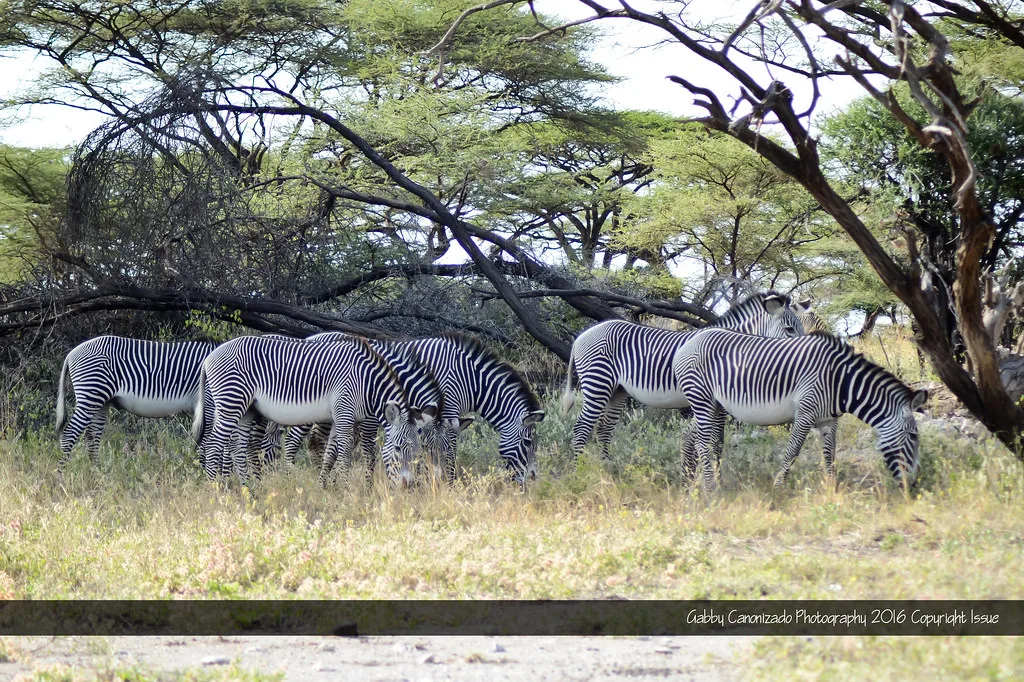
Dry-country wildlife is a reason to spend several safari days in Samburu National Reserve, in northern Kenya. Game drives explore the Ewaso Ng'iro River and the surrounding semi-arid terrain. When choosing a camp, ask where the drives go and how it works with local guides and communities.
A stay with several game drives gives you more chances to observe changing animal activity than a brief transit stop. Wildlife sightings remain unpredictable.
Understand the Samburu Five
The Samburu County Government identifies five characteristic animals: Grevy's zebra, reticulated giraffe, gerenuk, Beisa oryx and Somali ostrich. These give a game drive a different focus from a trip built only around the best-known large predators.
Tell your guide what interests you and leave time to watch behaviour. Leave time for elephants and birdlife too, with the understanding that sightings are unpredictable. Keep the vehicle at the distance your guide requires and avoid pressing for a closer photograph.
View in GoExploringChoose the camp and reserve together
Check precisely where a camp is located and where its included drives operate. Samburu, Buffalo Springs and Shaba are separate reserves. A lodge may use the name of the wider area, so check which entry charges are included.
Ask for an itemised description of transfers, reserve access, guiding and activities. If you plan to visit an adjoining conservancy, confirm that arrangement separately. Compare arriving by road and air against the number of nights you have for the safari.
Book cultural experiences with clear consent
Ask who runs a proposed community visit, how hosts are paid and whether they set the programme. Ask the provider to explain what happens during the visit and how any cultural or conservation fee benefits the community.
Agree when photographs are welcome, and buy work directly if invited. Respect residents' homes and daily work; allow time for a conversation when your hosts are happy to talk.
Plan the days around conditions
Ask your operator how rain, heat and current road conditions affect the intended route. Choose travel dates using their local information and current official advice. Leave flexibility in the drive schedule and follow the reserve's access rules.
Before confirming a booking, get the camp's cancellation and transfer arrangements in writing. Check whether your final morning includes a drive and when you must leave for the next connection; that detail determines how much safari time the last night actually adds.