

Thailand's waterfalls range from roadside cascades to remote falls reached through wildlife sanctuaries and mountain parks. Kanchanaburi has several well-known falls within a broad forested region; Chiang Mai pairs high-country cascades with short walks, while Tak has waterfalls that need more time on the road.
Rain changes the color, volume and safety of the water. A path that feels easy in dry weather may turn slick after a shower, and park access can change with conditions or seasonal closures. Check the current notice from the park before setting out, and treat swimming as optional wherever currents or signs make it unsafe.
Thailand waterfalls at a glance
| Waterfall | Region | Best experience | Main caution |
|---|---|---|---|
| Erawan | Kanchanaburi | Seven-tier forest walk | Slippery rock and changing flow |
| Huai Mae Khamin | Kanchanaburi | Multi-level limestone falls | Long drive; check park access |
| Sai Yok Noi | Kanchanaburi | Easy roadside stop | Wet rock near the cascade |
| Thi Lo Su | Tak | Remote sanctuary visit | Long approach and access rules |
| Pha Charoen | Tak | Cascades beside the road | Wet-season conditions |
| Wachirathan | Chiang Mai | Mountain waterfall viewpoint | Heavy spray and slick paths |
The 10 best waterfalls in Thailand
Climb the tiers at Erawan

Erawan Waterfall lies inside Erawan National Park in Kanchanaburi. Its seven tiers climb through forest, with pools and short trail sections linking the lower falls to the upper levels. You can turn back at any point, so a visit need not mean hiking to the top.
The route gets steeper farther in, and limestone beside the water can be slick. Wear shoes with grip and follow the park's current swimming and trail rules. The upper section takes more time than a quick look at the first pools, so start early if you want to explore several levels.
Follow the cascades at Huai Mae Khamin

Huai Mae Khamin Waterfall is in Kanchanaburi, on the eastern side of Srinakarin Dam National Park. The stream runs over limestone ledges in seven named tiers. The fourth level, Chatkaew, spreads into a broad curtain; the upper level looks across the reservoir.
The falls sit well beyond the main town, so check the route and allow time for the drive. Paths between levels involve steps and uneven ground. Stay on marked routes, particularly after rain, and check whether the park is open before you travel.
Visit Sai Yok Noi

Sai Yok Noi is a compact waterfall in Sai Yok National Park, beside the route through Kanchanaburi's western countryside. Its location makes it an easy stop to pair with a longer day around the River Kwai and the national park.
The rocks around the water are slippery, even where the approach looks short. Stay behind any barriers and keep children close near the stream. If you are planning a longer visit to the area, check the park's current conditions and transport options before leaving Kanchanaburi.
Make the journey to Thi Lo Su
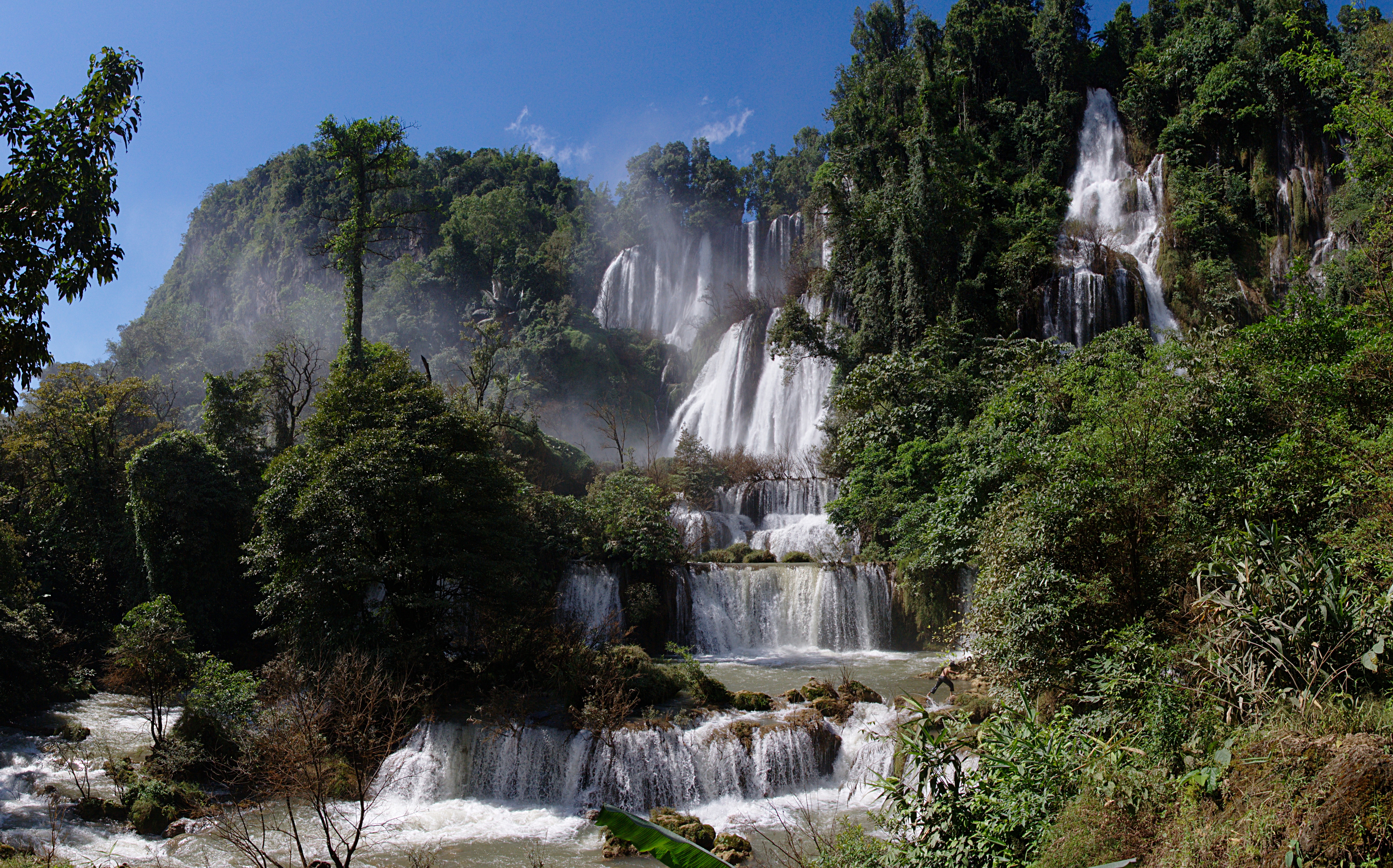
Thi Lo Su is in Umphang Wildlife Sanctuary, in Tak province. The waterfall is a major reason to visit this remote part of western Thailand, where forested mountains make the journey part of the trip.
Plan this as a dedicated outing and check the sanctuary's current access rules before booking transport. The approach can be affected by seasonal road and weather conditions. Use authorized local arrangements, carry water and follow staff guidance around the falls and sanctuary trails.
Stop at Pha Charoen

Pha Charoen Waterfall is in Tak province, not far from the Mae Sot area. The Department of National Parks describes it as a limestone waterfall with many small cascades, close to the highway. It is a useful stop on a trip through the province rather than a destination that needs a full expedition of its own.
The park is in a mountainous area with a pronounced rainy season. Expect wet paths in the months with heavier rain and check conditions locally before walking around the falls. Keep to the marked area and avoid climbing wet limestone.
Visit Mae Ya in Doi Inthanon National Park

Mae Ya sits in the foothills of Doi Inthanon National Park, south of Chiang Mai. It works well as a first stop on a day in the park, before continuing toward other viewpoints and falls higher on the mountain.
Check the current park map and road access when planning the route, since the park covers a large area and the sites are spread out. Wear shoes that can handle damp ground, and allow time for the drive between the entrance and each stop.
Feel the spray at Wachirathan

Wachirathan is one of the large waterfalls inside Doi Inthanon National Park. Water drops from a high cliff into a forested ravine, and a wooden path leads visitors toward the falls for a closer view.
The spray can soak the path and nearby viewing area. Keep back from the water's edge, use the designated route and protect cameras or phones. It is an accessible stop by road, but conditions around the cascade can still be slippery.
Walk the limestone at Bua Tong

Bua Tong Waterfall, also called Sticky Waterfall, is in Chiang Mai province. Water runs over pale limestone formations, and the rough surface gives visitors a chance to walk up some sections where climbing is permitted.
Follow the park's rules and use the ropes or designated routes where provided. The rock is not a reason to ignore footing: algae, wet patches and crowded sections can still cause slips. Take care of the forest around the stream and leave the pools free of soap and litter.
Swim only where permitted at Chet Sao Noi

Chet Sao Noi Waterfall National Park sits around Muak Lek in Saraburi province. The waterfall is a modest cascade on a route that continues beyond Muak Lek, making it a convenient break for visitors exploring the area.
Check which pools are open for swimming when you arrive. Water depth and current vary, especially after rain. Use the marked paths and avoid jumping from rocks; a familiar-looking pool can hide submerged branches or sudden changes in depth.
See Phlio Waterfall in Chanthaburi

Phlio Waterfall is in Namtok Phlio National Park in eastern Thailand. The Tourism Authority of Thailand notes the clear water and fish in the stream, a detail that makes this a good place to slow down and observe the water as well as the falls.
Follow park guidance around the pools and wildlife. Do not feed or try to touch the fish, and avoid wearing sunscreen into the water if the park asks visitors to do so. Weekends can be busy, so an early visit leaves more room on the paths.
Choosing a Thailand waterfall trip
For a cluster of falls in one region, base a trip around Kanchanaburi and choose between Erawan, Huai Mae Khamin and Sai Yok Noi. Chiang Mai is a good fit for combining Mae Ya, Wachirathan and Bua Tong with mountain scenery. Tak needs more planning: Pha Charoen is easier to add to a road trip, while Thi Lo Su calls for a longer visit and current sanctuary access information. Chanthaburi offers a separate eastern option at Phlio.
The rainy season can make waterfalls fuller, but it also brings stronger currents, muddy paths and possible closures. The dry season can mean less water at some sites. Choose dates with the conditions in mind, and check the park's official channels shortly before leaving.
Before setting out
- Check current opening dates, trail access, swimming rules and park notices.
- Expect slick rock and wet steps, even when the walk to the falls is short.
- Keep out of fast water, closed pools and areas beyond safety barriers.
- Bring water, sun protection and footwear with grip; pack a dry bag for electronics.
- Use local guidance for remote sanctuary trips and confirm transport before you go.
- Leave wildlife, plants and rock formations undisturbed, and take rubbish back with you.
Official planning sources
- Tourism Authority of Thailand: Erawan Waterfall
- Tourism Authority of Thailand: Huai Mae Khamin Waterfall
- Tourism Authority of Thailand: Kanchanaburi
- Tourism Authority of Thailand: West Thailand and Thi Lo Su
- Department of National Parks: Pha Charoen National Park
- Tourism Authority of Thailand: Doi Inthanon
- Tourism Authority of Thailand: five waterfalls across Thailand
- Tourism Authority of Thailand: Chet Sao Noi Waterfall National Park
- Tourism Authority of Thailand: current annual national park closures
- Wikimedia Commons image file: Erawan Waterfall