

Indonesia's volcanoes are part of daily life, not just distant peaks. You can walk across the ash plain below Mount Bromo, look into steaming craters at Ijen and Sibayak, or climb through forest toward Rinjani's high caldera. On Flores, the colored lakes of Kelimutu sit within a national park above the village of Moni.
Volcanic access changes with activity, gas, wildfire risk and weather. A route that was open last season may be closed today. Check Indonesia's MAGMA volcano monitoring service and the relevant park or conservation authority before you travel, follow exclusion zones, and keep a lower-level plan in case a trail closes.
Indonesia volcanoes at a glance
| Volcano | Region | Best experience | Typical commitment |
|---|---|---|---|
| Mount Bromo | East Java | Walk the Sea of Sand and crater rim | Half to full day |
| Kawah Ijen | East Java | Crater rim and turquoise lake | Half day |
| Mount Batur | Bali | Pre-dawn summit hike | Half day |
| Mount Rinjani | Lombok | Multi-day caldera trek | 2–4 days |
| Mount Kelimutu | Flores | Viewpoints over three crater lakes | Half day |
| Tangkuban Perahu | West Java | Managed crater viewpoints | Half day |
| Mount Papandayan | West Java | Crater, forest and highland walk | Full day or overnight |
| Dieng Plateau | Central Java | Walk the Sikidang geothermal area | Half day |
| Mount Sibayak | North Sumatra | Hike to the fumarole area | Half day |
| Mount Kerinci | Sumatra | High rainforest summit trek | 2–3 days |
The 10 best volcano experiences in Indonesia
Walk the Sea of Sand at Mount Bromo

Mount Bromo sits within the broad Tengger caldera in East Java. The walk across the Sea of Sand gives you a sense of the scale of this volcanic landscape before the final climb to the crater rim. Sunrise viewpoints above the caldera are popular, but the walk itself is a closer look at the ash and volcanic cones.
Check the Bromo Tengger Semeru National Park visitor rules, including the current online booking process, before setting out. Use marked routes and obey crater barriers. Cold air, dust and early starts make warm layers, eye protection and a headlamp useful.
Hike the rim of Kawah Ijen

Kawah Ijen's trail climbs from Paltuding to the crater rim, where the turquoise lake lies below a steep volcanic wall. Some visitors go before dawn hoping to see blue flames from burning sulfur gas, but visibility, conditions and access determine whether that is possible.
Kawah Ijen access has recently changed with wildfire and safety conditions. Check the Banyuwangi government's current reopening notice and MAGMA monitoring before booking. Bring a headlamp and sturdy shoes, use respiratory protection if authorities advise it, and leave immediately if gas affects your breathing.
Climb Mount Batur before dawn

Mount Batur rises above Lake Batur in Bali's Kintamani highlands. The usual pre-dawn hike climbs to a summit viewpoint for sunrise over the caldera. It is a shorter outing than a Rinjani trek, but the dark, uneven volcanic path still calls for a guide, a steady pace and good footwear.
Confirm local access arrangements and volcanic conditions before you go. Bring a headlamp and a warm layer for the summit, and don't enter a closed area. If cloud covers the caldera, the walk still crosses the dark lava terrain, but the view may be limited.
Trek Mount Rinjani's caldera

On Lombok, Mount Rinjani's routes climb through forest and open volcanic slopes to a high crater rim above Segara Anak, a lake inside the caldera. Reaching the lake or summit is a multi-day trek with steep ground, cold nights and a demanding descent.
The park has restricted access in response to wildfire risk, and its booking arrangements can change. Read the latest Gunung Rinjani National Park notices before arranging a trek. Choose a licensed operator, allow time to acclimatize and bring proper cold-weather and rain gear.
See the three lakes of Mount Kelimutu
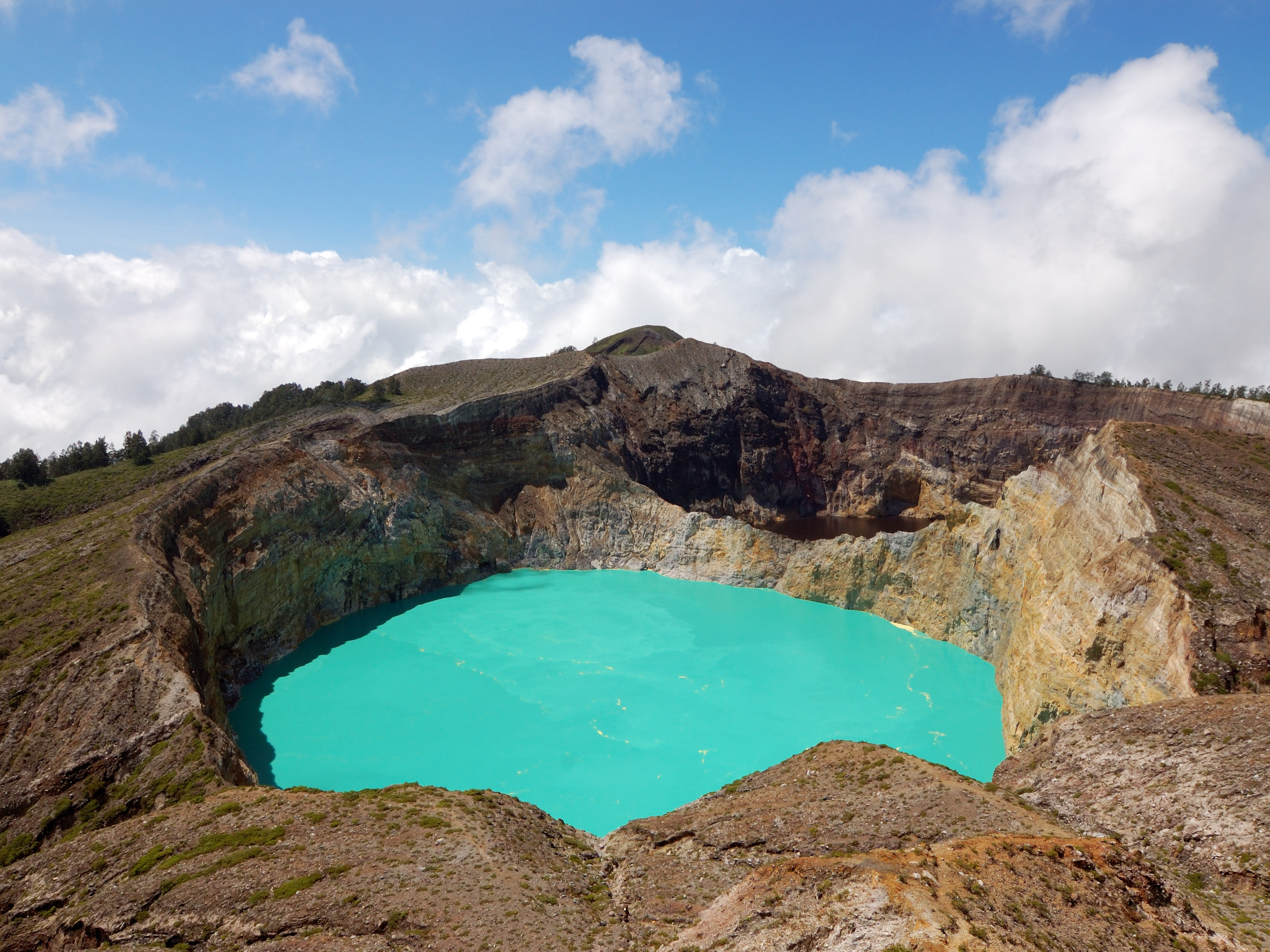
Kelimutu National Park on Flores protects three crater lakes whose colors shift over time. A short climb from the upper parking area reaches viewpoints above the lakes; Moni is the nearest village and a practical base for an early start.
Check opening hours, ticketing and trail notices on the official Kelimutu National Park site. Stay on permitted paths and respect barriers around unstable ground. Clouds can hide the lakes, so leave room in your itinerary in case you want another attempt.
Visit Tangkuban Perahu's crater viewpoints

North of Bandung, Tangkuban Perahu is an active volcano with managed access to crater viewpoints. The visitor area lets you see a volcanic crater without a summit trek, though sulfur fumes and activity restrictions can affect how close you may go.
Check local authority information and current volcanic notices before travelling. The Subang Regency tourism site describes access to the visitor area, while MAGMA carries monitoring updates. Keep away from crater edges and leave promptly if staff close a viewpoint.
Hike through Mount Papandayan's geothermal landscape

Mount Papandayan in West Java has an accessible lower crater area, fumaroles and routes that continue toward the Dead Forest and highland camping areas. You can make this a day hike or stay overnight at an established camp, depending on current route access and your experience.
At the entrance, follow staff instructions and stay on the signed trail. Sulfur gas can collect near vents, so keep distance from fumaroles and follow any mask guidance. The Indonesian Ministry of Tourism attraction listing provides current visitor information; check volcanic status on MAGMA as well.
Walk the geothermal paths at Dieng
.jpg)
The Dieng Plateau in Central Java is a high volcanic basin with crater fields and lakes. At Sikidang Crater, visitor paths and a raised wooden walkway take you through a geothermal area where steam and bubbling mud mark active vents.
Keep to the designated walkway and don't approach vents or pools. Gas and heat make this a managed visit, not an open crater hike. The Central Java provincial tourism authority's Sikidang page describes the visitor route; check local notices before you travel.
Hike Mount Sibayak above Berastagi

Mount Sibayak in North Sumatra offers a half-day climb from Berastagi to open volcanic ground near the summit. Fumaroles and sulfur deposits show the mountain's geothermal activity, and the highland views make the climb worthwhile even when cloud hides the sunrise.
Start with a local guide if you don't know the trail, and check the latest volcanic information before leaving. Keep well away from steam vents, carry a headlamp for an early start and stay on the established route. The official Indonesia Travel Sibayak guide has destination and access details.
Trek through Kerinci Seblat to Mount Kerinci

Mount Kerinci is Sumatra's highest mountain and a demanding climb through Kerinci Seblat National Park. The route rises from rainforest to exposed volcanic terrain; summit attempts are long, cold and physically strenuous.
Check the national park's official ticket and registration system and current MAGMA alerts before planning the climb. Use a qualified local guide, prepare for wet forest conditions and give yourself time to recover after reaching altitude. If you are not equipped for a multi-day trek, choose a lower walk in the national park instead.
Choosing a volcano experience
For a short visit with road access, consider Bromo, Tangkuban Perahu or Sikidang. Batur, Sibayak and Papandayan are day hikes with very different terrain. Rinjani and Kerinci are multi-day mountain objectives; Kelimutu is a gentler crater-lake walk. Ijen combines a substantial night or dawn hike with a close look at an active geothermal area.
Indonesia's islands are far apart, so group volcanoes by region. Bromo and Ijen fit an East Java itinerary; Batur and Rinjani need separate Bali and Lombok planning; Kelimutu belongs on a Flores route. Leave buffer days for weather, flights and park closures.
Volcano safety
- Check MAGMA Indonesia and the park authority's latest access notice before setting out.
- Obey crater exclusion zones, gas warnings, trail closures and instructions from rangers.
- Bring water, a headlamp, weather protection and footwear suited to loose or muddy ground.
- Use a qualified guide for multi-day treks and routes where conditions can change quickly.
- Keep a lower-altitude alternative in your itinerary; do not try to bypass a closure.